There are a couple of new papers from our research group published recently that I’d love to share with you.
FIRSTLY, our article naming a new genus and species of fossil lungfish “A new Late Devonian dipnoan from the Ketleri Formation of Latvia” was published last week in the Journal of Vertebrate Paleontology. I was invited to lead this research by my colleagues in Latvia and Sweden, following their discovery of new fossil lungfish material from a site known as Pavāri-2 within the Ketleri Formation. My co-authors included Ervīns Lukševičs, Per Erik Ahlberg, Valters Alksnītis, Aubrey R. Keirnan & Grzegorz Niedźwiedzki.
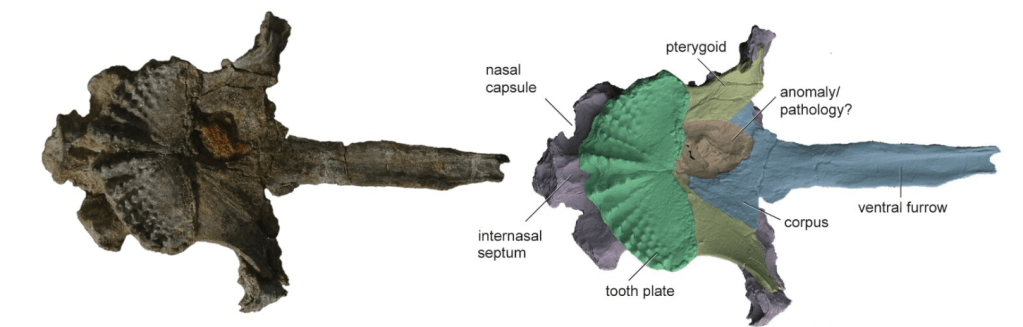
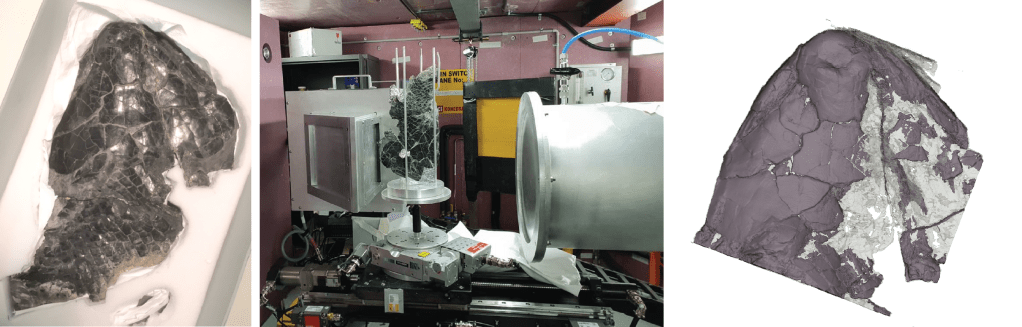
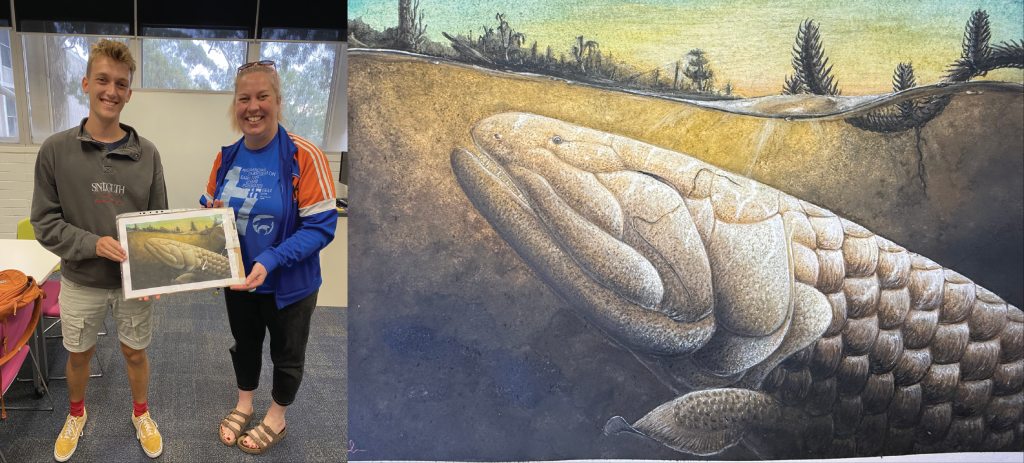
The new discovery includes a beautifully preserved, articulated palate (the roof of the mouth), a partial braincase, and tooth plates of a new type of fossil lungfish. It is known only from a single specimen, but we could see that the details preserved were unique and so justified naming a new (genus and) species from the material. We named it after Jumis, an ancient Latvian pagan god of fertility, abundance, and harvest. We chose this name because the outline of the fish’s tooth plates closely resembles the traditional cross-like symbol used to represent Jumis (and it felt a bit bad ass!). It’s full name is Jumisodus latus.
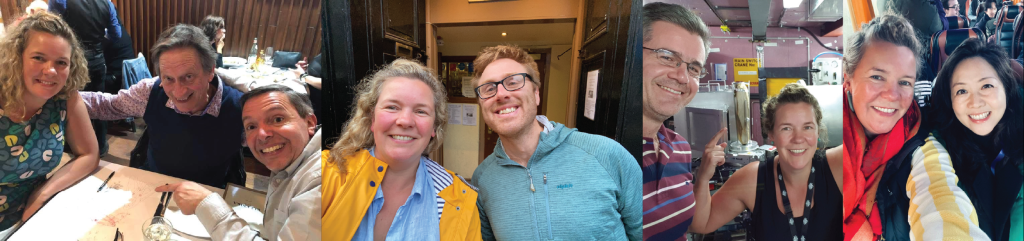
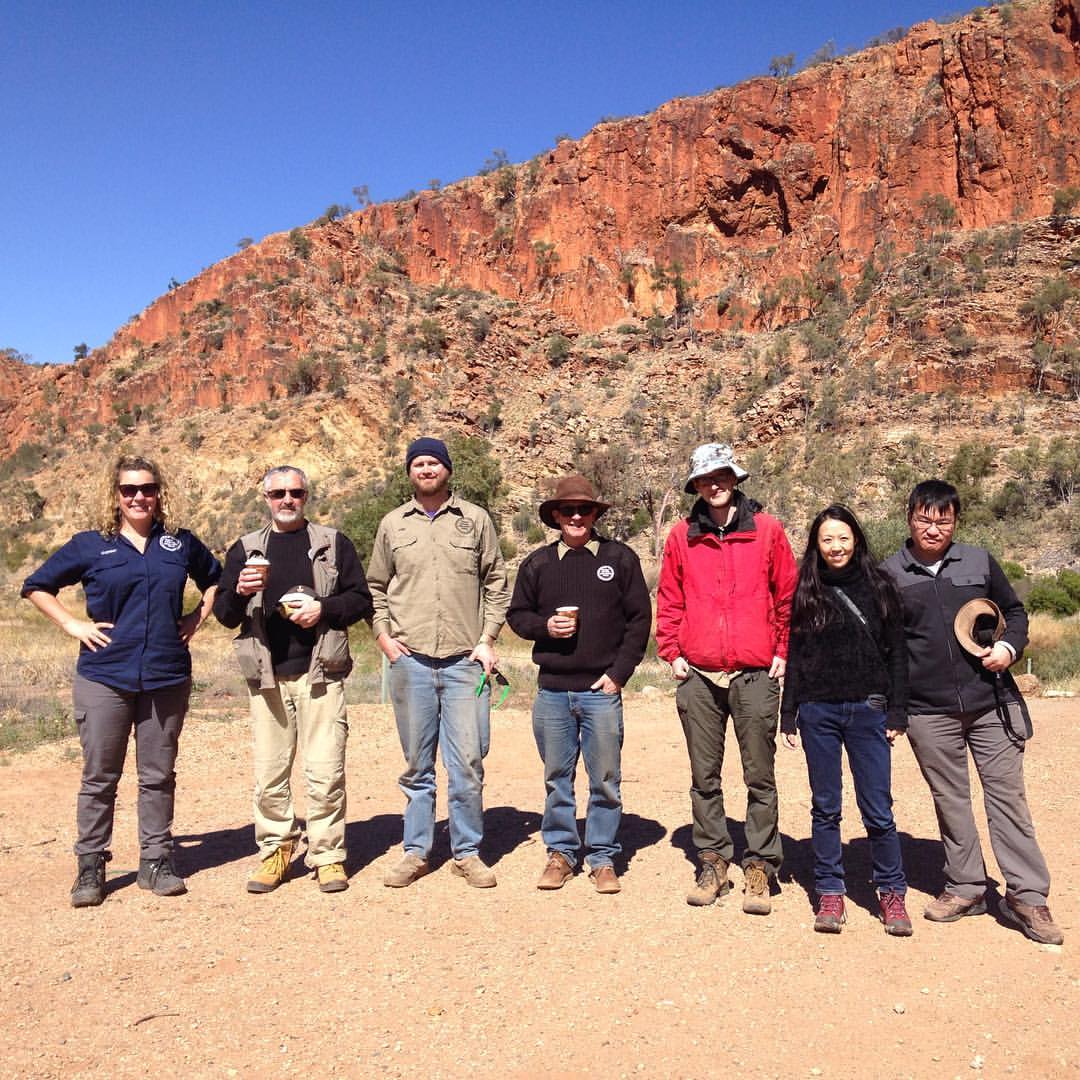
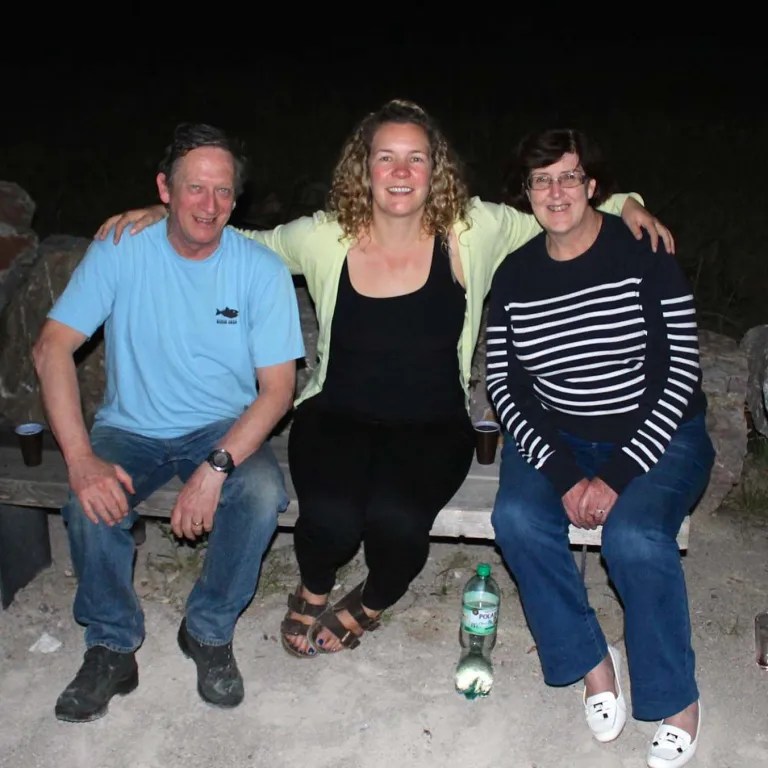
Below is a photo of the excavation team of 2023 at the Pavāri-2 site, standing in front of the Pavāri-2 outcrop, where the Upper Famennian deposits crop out, and where Jumisodus specimen was found in 2022. This photo was taken next year after Valters found Jumisodus specimen. I am hoping to visit this site next year in 2027.
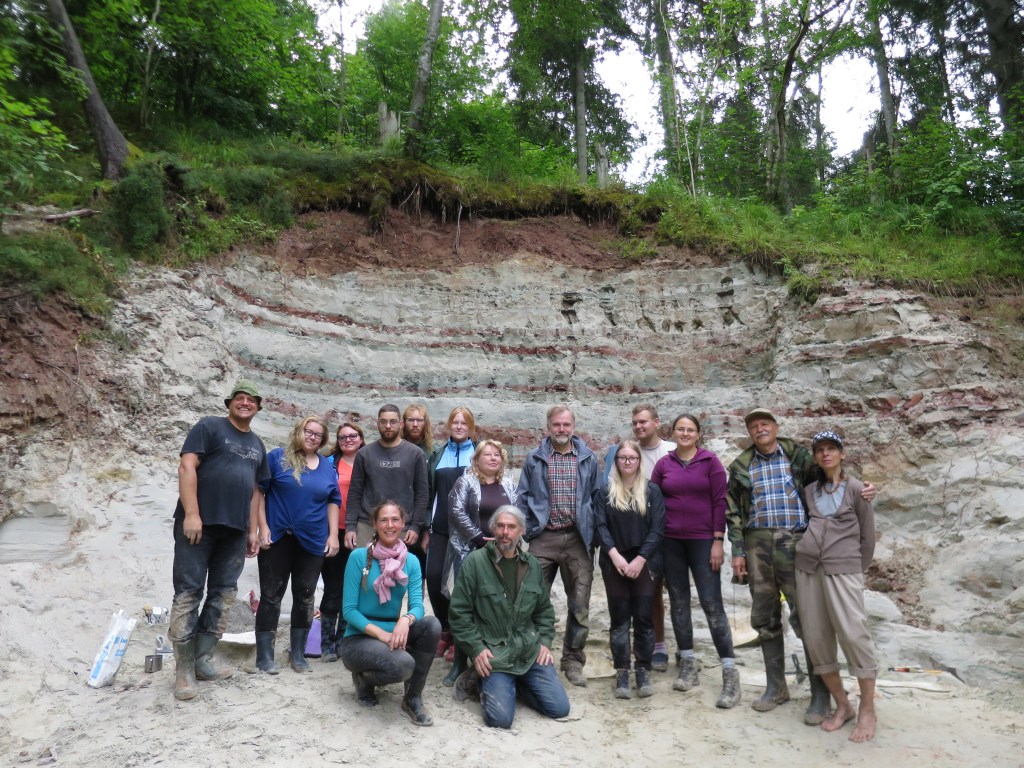
Image taken by Juris Vībāns (first from the left). Co-authors higlighted in bold.
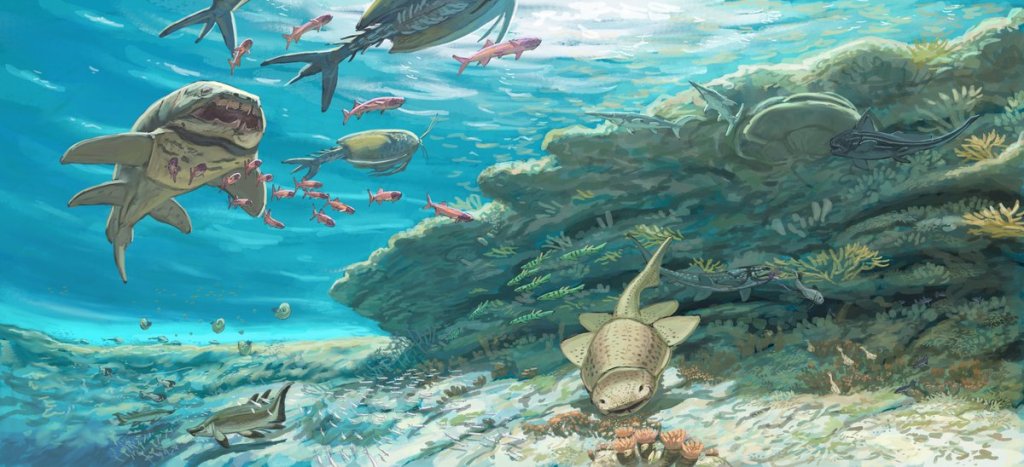
SECONDLY, our paper “Hard-object feeding adaptations infer relative predator-prey size relationships in Devonian placoderms” from D. Rex Mitchell, Kate Trinajstic, John A. Long, Austin N. Fitzpatrick, Joshua Bland & Alice M. Clement, was published in Scientific Reports this June. This work built upon an earlier study using an approach from engineering, Finite Element Analysis (FEA) on the spectacular and 3D-preserved fish fossils from the Gogo Formation in northern Western Australia (see our earlier paper Bland et al. 2025 on Gogo lungfish jaws).
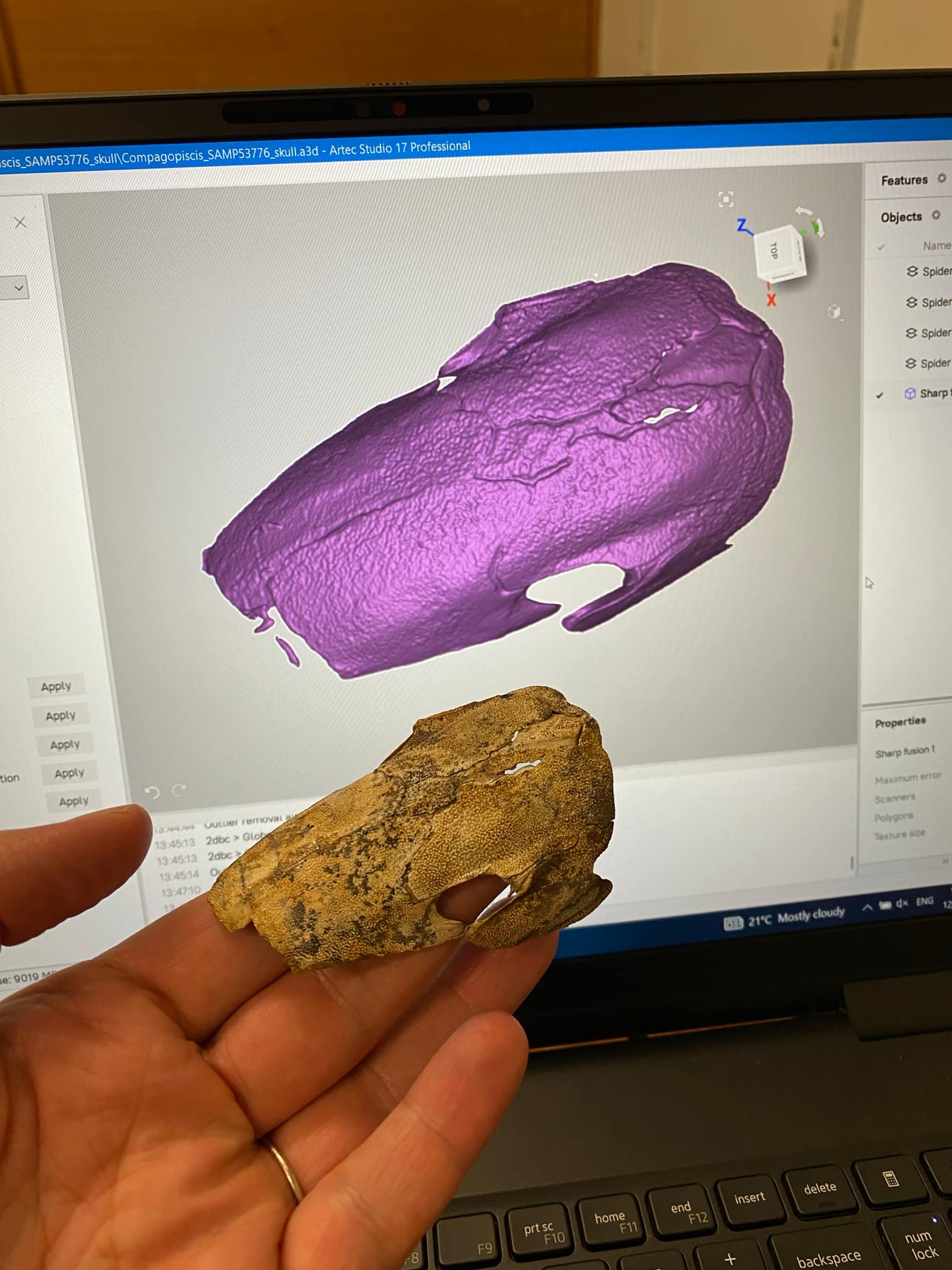
This Mitchell et al. (2026) paper investigated how ancient jawed fish, known as ‘placoderms‘ from the Late Devonian Gogo Fromation processed hard-shelled or armoured prey, a behaviour known as durophagy. We created digital models of the lower jaws (mandibles) of eight different species of placoderm that were once living alongside each other in a tropical reef some 385 million years ago, and then anlaysed them using FEA and a kind of 3D surface complexity mapping (called Dirichlet normal energy), to analyse how these jaws might have functioned, and what kind of prey they might have been capable of eating.
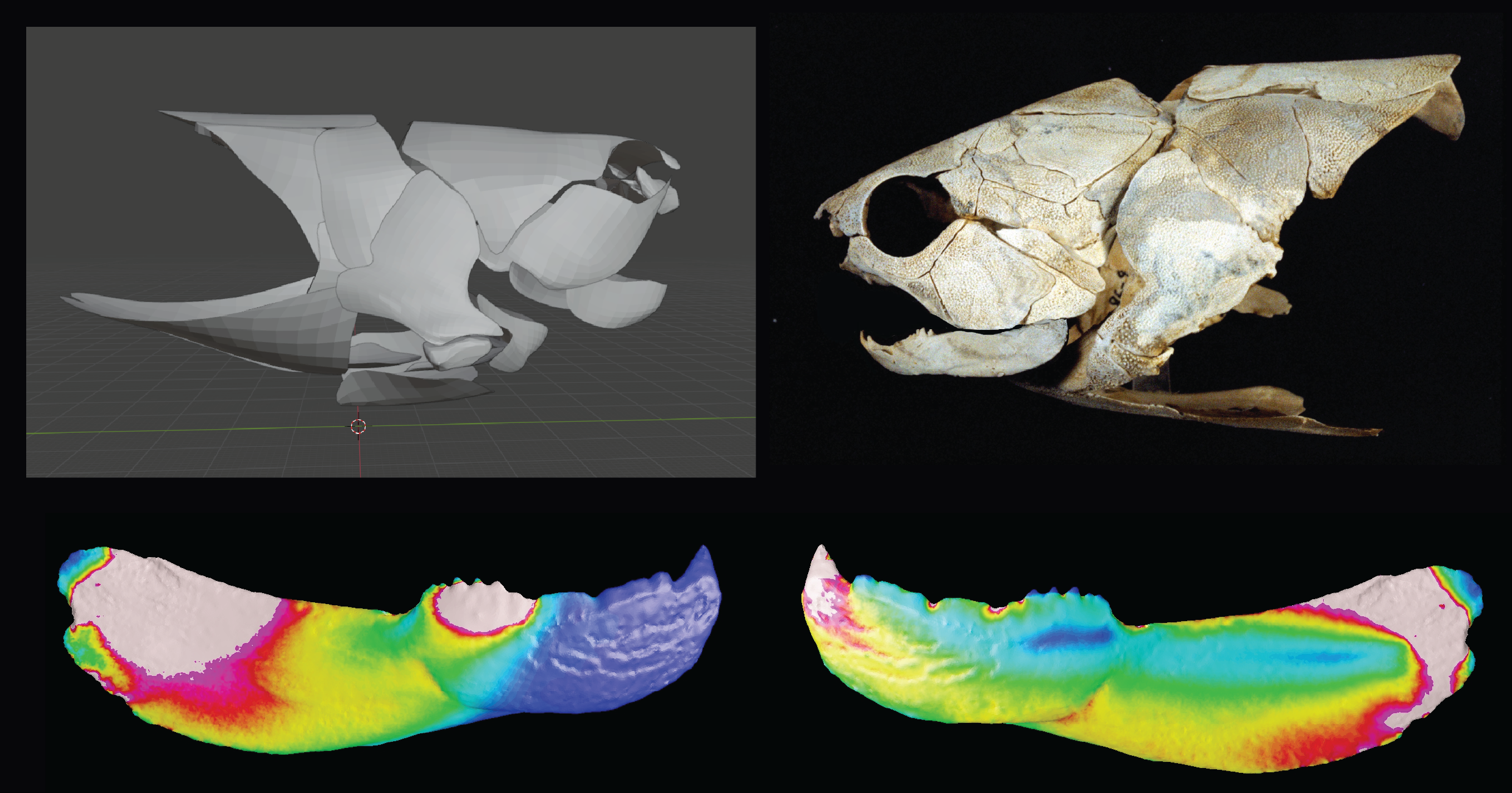
We discovered that these prehistoric placoderm fish didn’t all handle hard foods the same way. Instead, their evolutionary adaptations depended heavily on body size and predator-to-prey ratios. However, our study showed that the consumption of hard prey in early jawed vertebrates wasn’t just a matter of “bigger predator = tougher prey”. Instead, different species evolved highly distinct mechanical solutions governed by their relative size compared to their food. The variation of approaches to handling hard prey among different species of placoderms likely led to niche specialisation, enabling a more diverse array of fishes to coexist in their ancient reef environment.
This work on the Gogo Formation placoderms was supported by Australian Research Council grant (DP 220100825, awarded to co-authors Long, Trinajstic and Clement). We thank and acknowledge the Gooniyandi people and country for providing access to their land and fossils.