Super Scanning Spills Stem-tetrapod Secrets

(Like the title? I do a love a touch of alliteration…) It’s been a while since I wrote, but our lab group have a couple of recent publications out based on scanning of stem-tetrapod (tetrapodomorph fish) fossils that I’d love to fill you in on.

Firstly, PhD candidate Corinne Mensforth led a study on an enigmatic fish from Antarctica called Koharalepis. This species was first described by Gavin Young and colleagues in the 90s, and in 2018, John Long, Brian Choo and I published a paper based on synchrotron scans of the holotype and only known specimen. However, this was a difficult specimen to image and it had kept many of it’s secrets from us … until now.
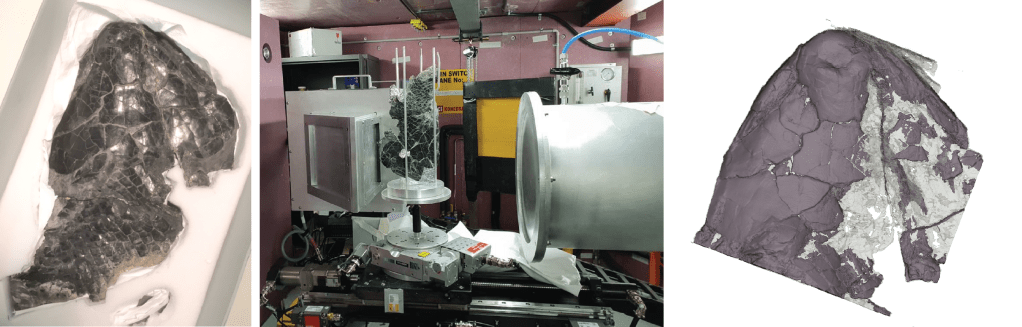
More recently, we have used neutron tomography to scan this fish, a technique which has finally revealed to us much more of the internal features preserved within this fossil that we had been able to see before. This led to Corinne’s paper, “New data on the sarcopterygian Koharalepis jarviki (Tetrapodomorpha; Canowindridae) from the Late Devonian of Antarctica, revealed via synchrotron and neutron tomography” published in the journal Frontiers in Ecology and Evolution in April this year.

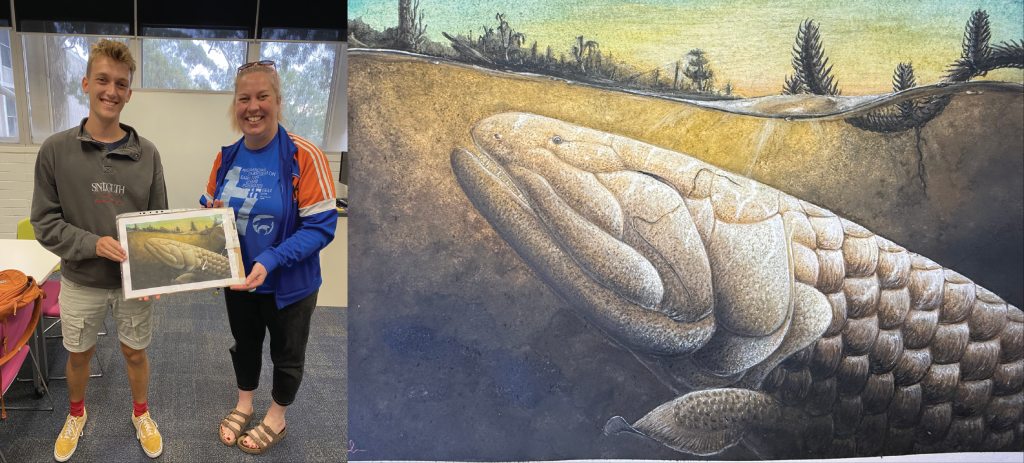
It was great to see Koharalepis get a moment in the spotlight, with the media release getting picked up all over the world, including a mention in IFLScience! This was certainly helped by the stunning life reconstruction that our talented Honours student, Tom Turner, created. Just beautiful!!
Read more: Remembering Tilly Edinger, the pioneering ‘brainy’ woman who fled Nazi Germany and founded palaeoneurology

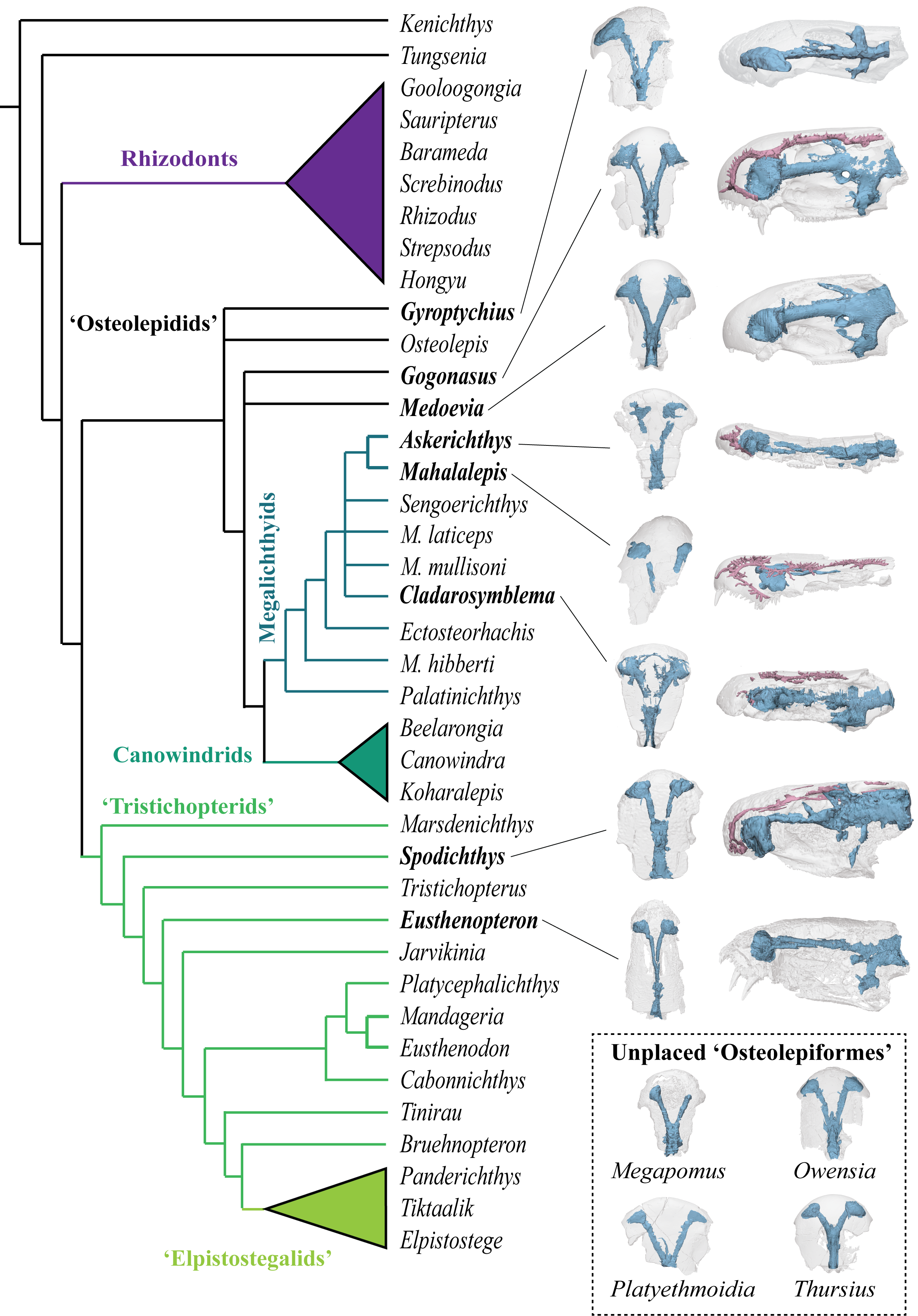
NEXT, and keeping on with the theme of high powered scanning of stem-tetrapod fossils, today my long-awaited publication “Ethmosphenoid endocasts elucidate evolutionary braindivergences and interrelationships of stem tetrapods (Sarcopterygii, Tetrapodomorpha)” was published in Papers in Palaeontology, with a co-author list that truly spans the globe. Big thanks to all my co-authors, Richard Cloutier, Oleg Lebedev, Tom Challands, Jing Lu, Joseph Bevitt, Laurent Houle, Shaun Collin, & John Long. This one took a team effort and a long time…
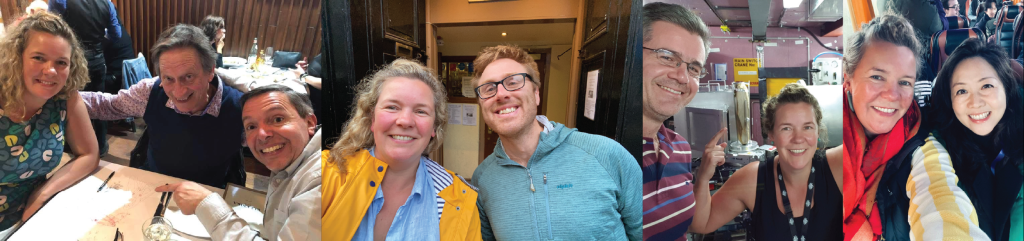
Good times with great collaborators: Alice shown with John Long, Richard Cloutier, Tom Challands, Joseph Bevitt and Jing Lu.
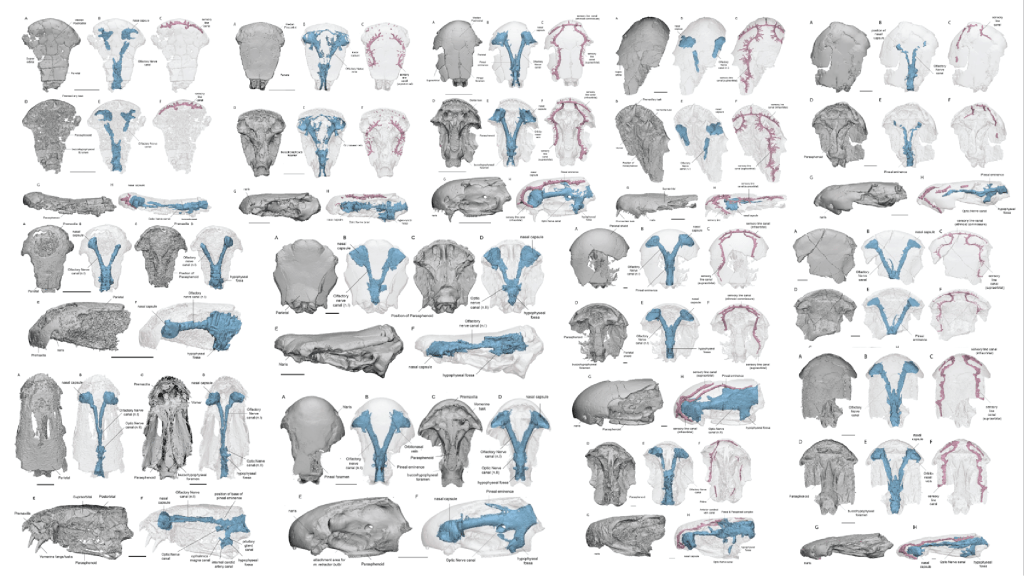
Skull, endocast and sensory canal morphology in 13 Palaeozoic tetrapodomorph taxa. (Image: Alice Clement)

In this work we scaned 13 taxa of stem tetrapods across three families (‘Tristichopteridae’, ‘Osteolepididae’, Megalichthyidae) to examine skull and endocast morphology using Principal Components Analysis. Of note there are some particularly mysterious and otherwise poorly-known species included in this analysis, including some more from Antarctica (Mahalalepis, Platyethmoidia, and a new still unamed fossil), Australia (Owensia), and Russia (Megapomus), alongside other better known species such as Gogonasus and Eusthenopteron.

Our study shows that the internal cranial endocast can be useful to help identify phylogentic affinity (relationships to other species) in forms where that is otherwise difficult to discern. We also deduce that stem tetrapods were likely quite conservative in their palaeoneurology (brain shape), in contrast to what we see in lungfishes, for example.
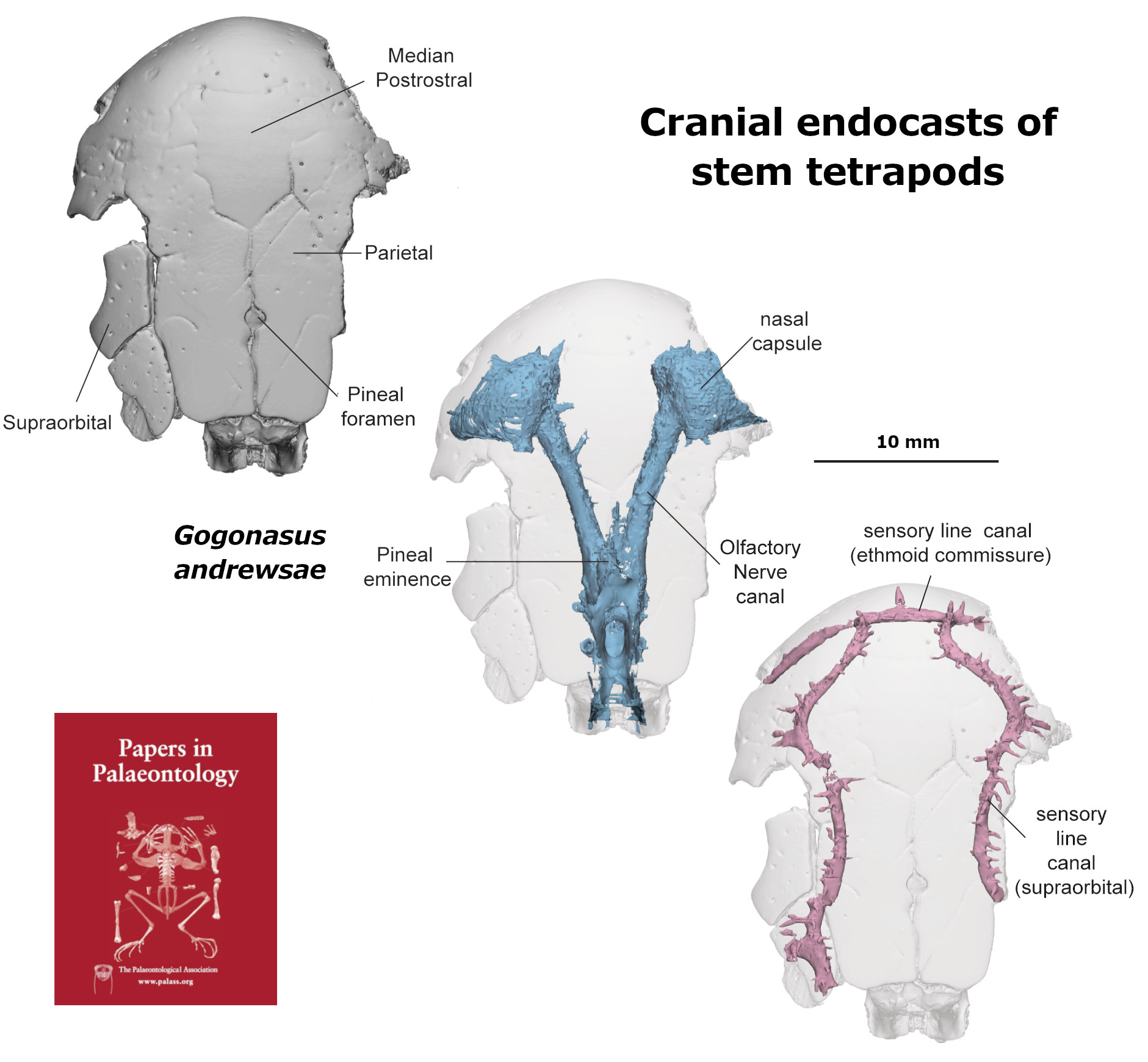
The scanning data and resultant 3D digital models for both studies are online and can be viewed via their respective projects on MorphoSource: Koharalepis, and Ethmosphenoid endocasts of stem tetrapods.
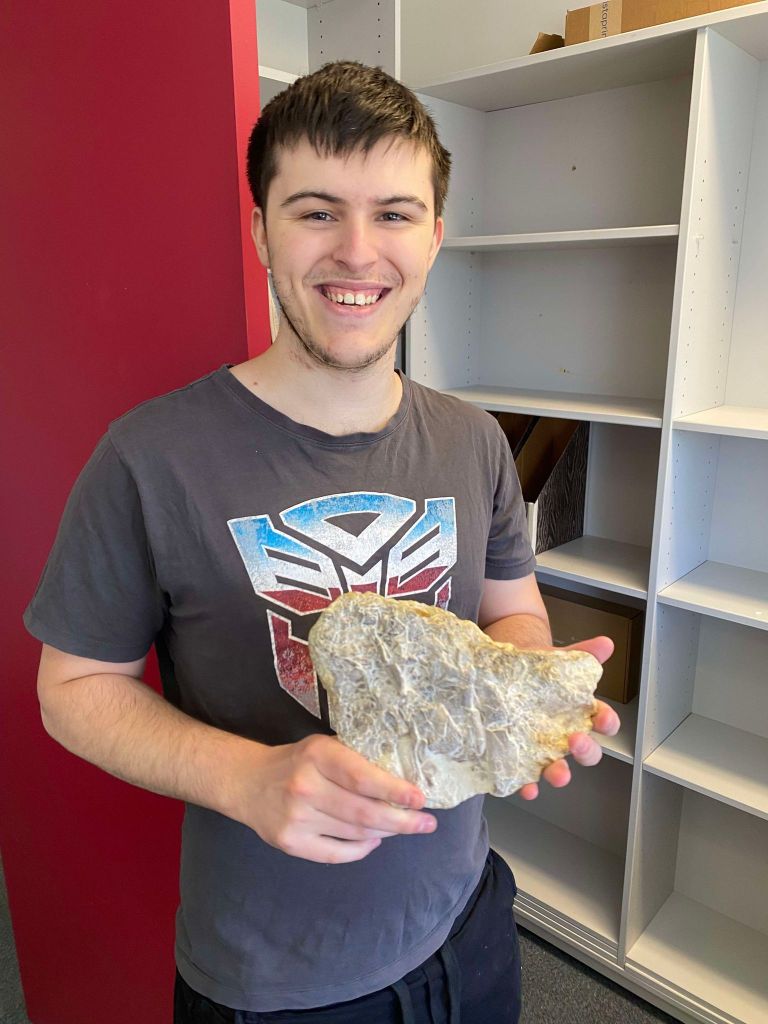
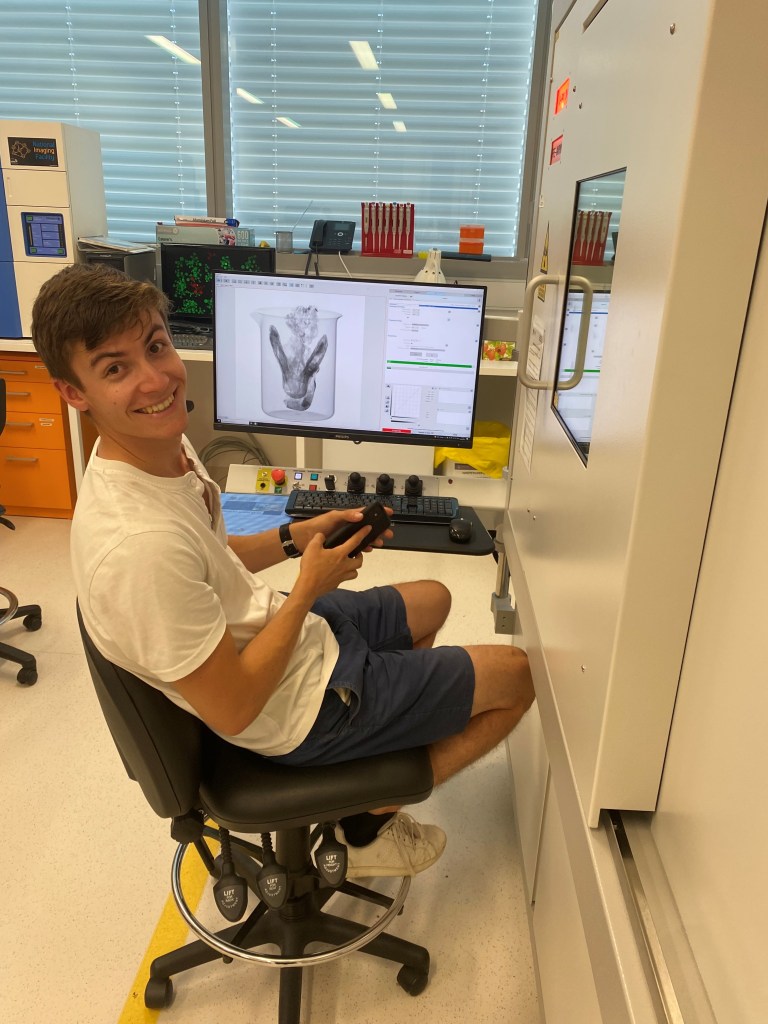
A tale of two Joshuas…

Nope, I am not about to talk about figures from the Hebrew Bible (you’re certainly in the wrong place if that is what you’re after), but instead some fantastic student-led work that was published recently by two of my students.

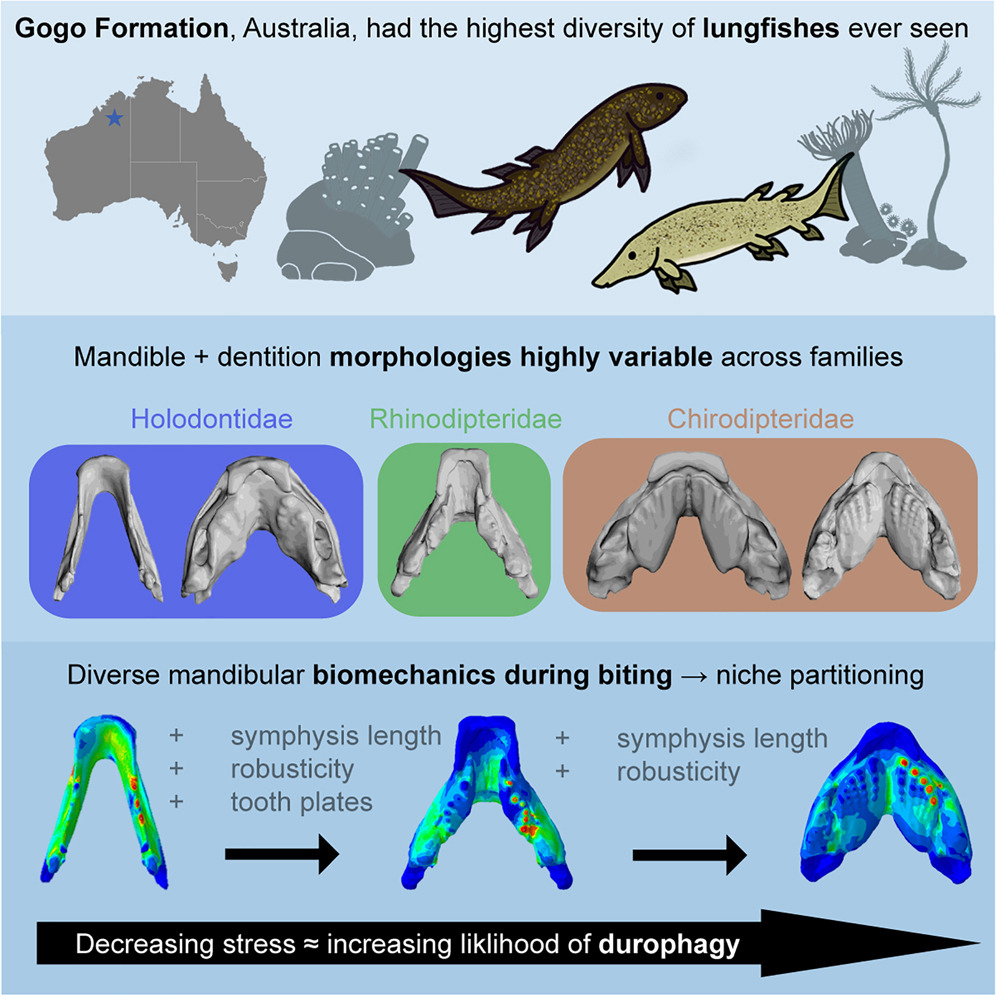
Firstly, Joshua Bland, who was an Honours student of mine at Flinders University during 2022-23, has published a paper in the mulitidisciplinary journal iScience with the title “Comparison of diverse mandibular mechanics during biting in Devonian lungfishes“.

He worked on fossil lungfishes from the Late Devonian Gogo Formation, of northern Western Australia, which are beautifully preserved in 3D. Gogo is an interesting site for lungfishes, as this ancient tropical reef preserves the most diverse assemblage of lungfish species in any space or time from throughout their 400 million year history.

Graphical abstract from Bland et al. (2025) https://www.sciencedirect.com/science/article/pii/S2589004225012313

The lungfish at Gogo are taxonomically diverse (many species), but also morphologically disparate (anatomically different from each other). We wondered how this may impact function, did their jaws work biomechanically differently from one another?

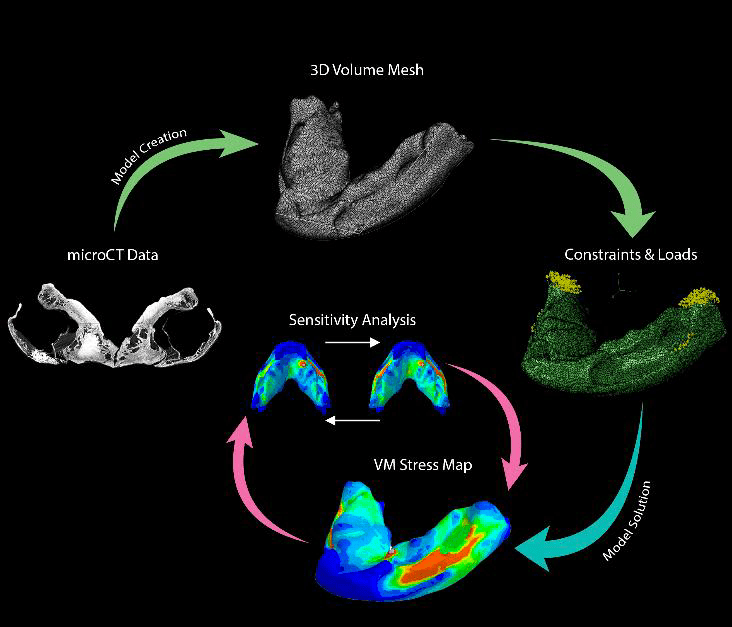
To answer this question, Josh used a technique adapted from engineering, called Finite Element Analysis (FEA). FEA is a computer-based method used to predict how structures respond to external forces by calculating the stress and strain within small, divided elements of the object. The first use of FEA in palaeontology was by Emily Rayfield and colleagues on the skull of a large theropod dinosaur in 2001, so its use remains quite recent for the field, and our study is the most comprehensive application to fossil fishes published thus far (yay!).

Generalised methods figure from Bland et al. (2025) showing stepwise
process to solve Finite Element Models of fossil lungfish mandibles (lower jaws) during biting.

Together with our co-authors, Hugo Dutel, John A. Long, Matteo Fabbri, Joseph Bevitt, and Kate Trinajstic, and our very own FEA guru, Olga Panagiotopoulou, we found a diversity of stress and strain experienced by our lower jaw models, with some surprising results. This diversity of jaw morphology and biomechanics seen among the lungfish at Gogo may have been one of the reasons driving their great success. Different lungfish were adapted for eating very different things and so weren’t in resource competition with each other.

Our comprehensive dataset offers the most detailed quantification of biting performance in any fossil fish thus far, providing biomechanical evidence for diverse feeding adaptations and niche partitioning within Gogo lungfishes.

And then to add to the excitement, another paper was published in the same week from another Joshua! This time it was current PhD student, Joshua Batt, publishing his first peer-reviewed paper in the Journal of Vertebrate Paleontology with “New rhizodontid (Tetrapodomorpha, Sarcopterygii) material from Romer’s gap (Tournaisian) of the Ballagan Formation (Scotland, UK).”

Working together with Dr Tom Challands, from the University of Edinburgh, researchers at Flinders University have been busy preparing and describing a real beast of a fish from the Early Carboniferous of the UK. The specimen was extracted by Tom and colleagues from Burnmouth in Scotland, but 10 or so large blocks of material came to Australia in 2020 for further study. Painstaking mechanical preparation has been done by Carey Burke and revealed what is likely to be one of, if not the most, complete articulated rhizodont fish known.

John Long, Carey Burke and Josh Batt inspect a specimen of fossil rhizodont at Flinders University.

Rhizodonts were large predatory lobe-finned fishes that lived throughout the Devonian and Carboniferous periods, usually in freshwater or estuarine environments. Some are thought to have grown as big as seven meters in length and they had very big teeth. Not a fish I would like to swim with!

Josh started working on this material for his Honours project during 2024, and there still remains a lot of it to be formally described, especially post-cranial material, but this first “rapid communication” paper presents the “main skull block”. Is this thing more beauty or beast… (perhaps beauty really is in the eye of the beholder?)

Image from Batt et al. (2025) JVP showing the dorsal view of NMS G.2025.10.1.1.

Needless to say, I felt very proud seeing two of my students have their first peer-reviewed publications come out. I expect more good things to come from both of them.

Want more? You can find both of these fantastic papers via the links below: