Super Daughter Day

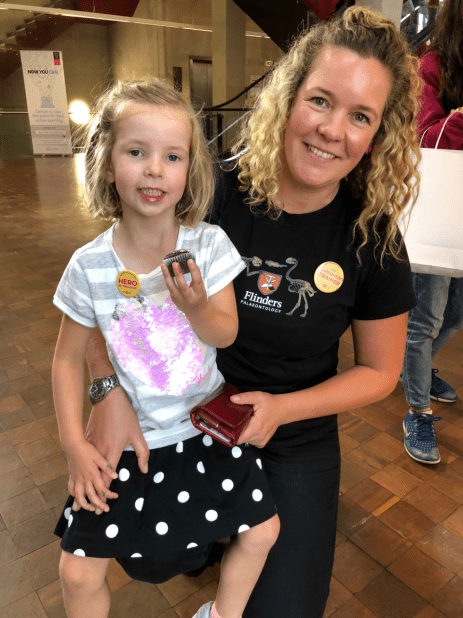
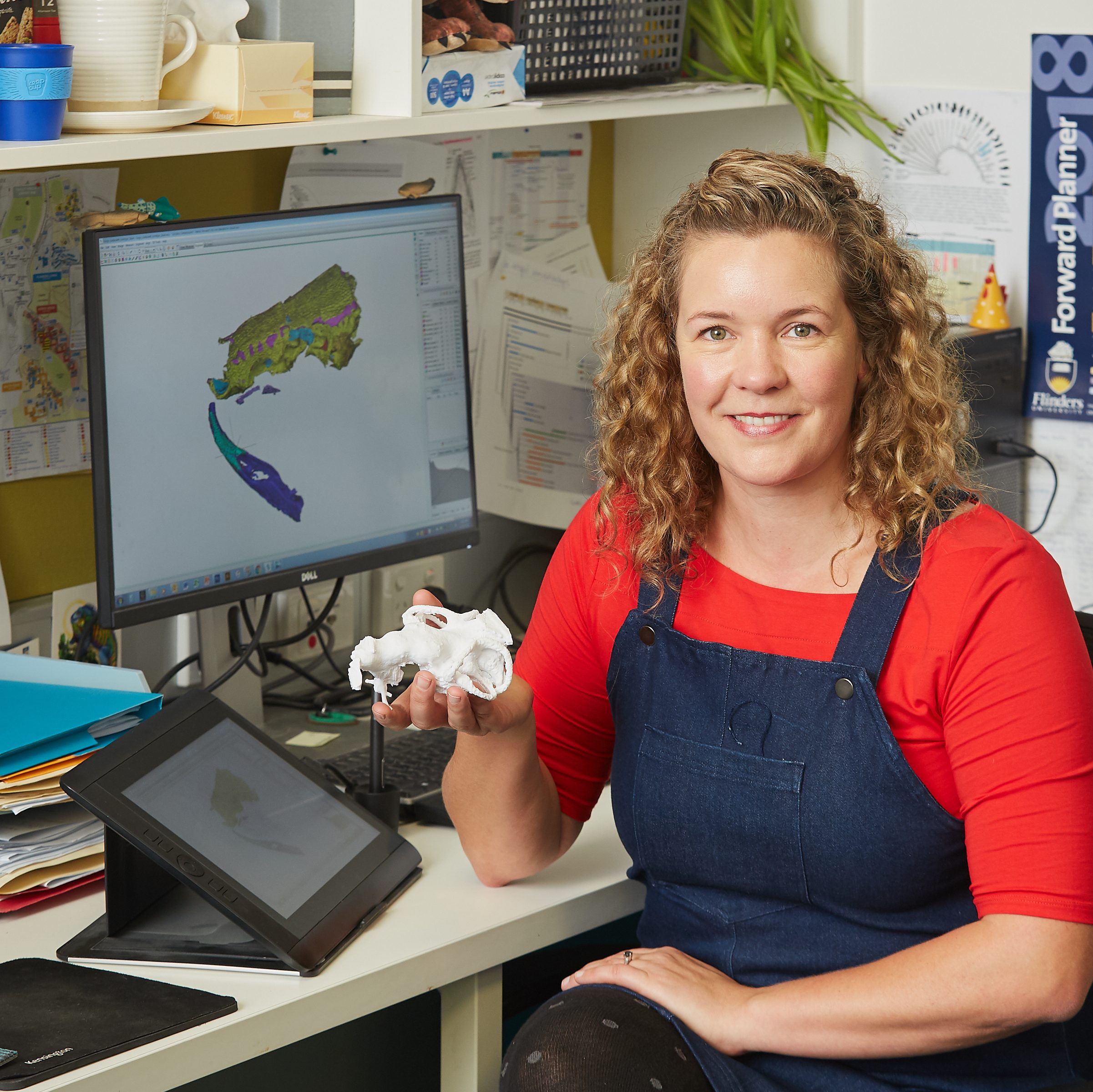
On Saturday I got to wear my “Super Hero Trainer” badge. I was exploring STEM (science, technology, engineering and maths) with girls aged 5-12 for Super Daughter Day in Melbourne.

The event was put on by Work180, a group doing wonderful things to further diversity in the STEM workforce across Australia and the UK, in fields including everything from mining to IT. They tackle the issue from both ends, working with employers and job applicants to better encourage diversity, inclusion and equality.

On the day we explored palaeontology and fossils in general, but also took a closer look at some of my favourite fossils that I work on. This meant the girls (and their parents) were introduced to some fossils, including the spectacular Gogo fish from Western Australia. There were some cool fossils to look at and hand around (the Megalodon tooth was a big hit!), fossils to dig up, and fizzy “bath bomb fossils” to prepare.

Super Daughter Day

I was super pleased to be involved in such a fantastic event, which also had the girls making slime, coding robots and engineering wacky inventions such as a piano made from bananas. Work180 say “Super Daughter Day was created to counteract gender stereotypes which are formed in children as young as 6 years old and to encourage young girls to explore STEM in a fun environment.”

This really resonated with me, as although I had been curious and excited about science as a young girl, during my school years I momentarily lost the spark. I’m not sure exactly why, but it might have been a tired science curriculum or teachers who were lacking the relevant support, resources or background to teach science passionately. Fortunately, in my later high school years I had several exceptional teachers who reignited my interest in science and saw me swing my focus from humanities back to STEM.

I’ve mentioned the idea of the “leaky pipeline” with respect to women in STEM before. One challenge we face is initially attracting girls to STEM, which events such as Super Daughter Day are clearly making great strides to combat. However, in my field of biology in particular, the bigger issue is not attracting, but retaining women. Female students make up the majority of students studying biology at both bachelor and postgraduate level, but after this stage the percentage of females drastically drops, with just 17% of senior academics in Australia (i.e. Professors) who are female. The situation is even worse for those who belong to minority groups or are further marginalised, such as for women of colour.

I applaud Work180 for the incredible work they are doing, and many thanks to Tanya Butenko for her coordination and to my wonderful mate, Amy Miller, for initial introductions. The Melbourne event was completely sold out, but Sydney and Hobart still have their events to come and I’m told there are tickets left! Click HERE to order yours now.

SDD with Rachie

*** See the original Work180 blog piece HERE 

Prof. Richard Cloutier

Bonjour! Canada’s foremost fossil fish fanatic, Prof. Richard Cloutier, from the Université du Québec à Rimouski (Canada), is currently on sabbatical here at Flinders University!

Richard was born in Canada but obtained his PhD from the University of Kansas (USA), before moving onto several postdoc positions throughout England and France, and then later returning to Canada.

I’m a real fan of his research and he’s got a huge body of work investigating the palaeoecology, palaeoenvironment and systematics of Devonian fossil fishes, especially those from the famous Escuminac Formation “Miguasha” in eastern Canada (such as the famous Eusthenopteron). I would really, really love to go there someday.

Richard is here in Australia to work with John Long and I on a number of projects together, the most exciting of which is the description and investigation of a beautiful specimen of the tetrapodomorph fish, Elpistostege (move over Tiktaalik, there’s a new ‘fish-apod’ in town!)

This month, Richard treated the Ecology and Evolution group here at Flinders University to a fantastic talk about his research. You can learn more or watch it here.

51604216_303700313682222_5854114293590523904_o


International Day of Women and Girls in Science

Yesterday was the International Day of Women and Girls in Science. Even though we have come leaps and bounds in recent years, we still have a long way to go to ensure women and girls are not excluded from participating fully in science. According to the UN, less than 30% of researchers worldwide are women. Gender biases and stereotypes must be combated to enable more young girls and women to participate in science-related fields.

It was for this reason that I was particularly glad to be talking to Work180 yesterday about running a palaeontology activity in their upcoming Super Daughter Day this March in Melbourne. On the day I’ll be exploring STEM (Science, Technology, Engineering and Maths) with girls aged 5-12 and encouraging participation in the huge variety that STEM has to offer.

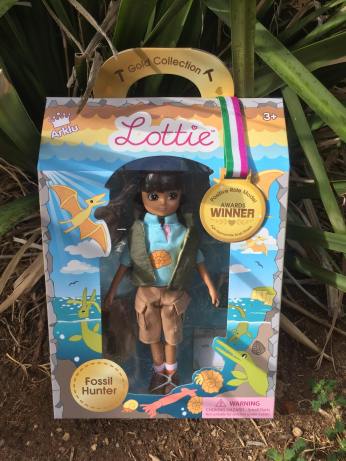
It’s been so heartening during the last few years to see more visible positive role models for girls in STEM, and even some great new toys such as Lottie the fossil hunter endorsed by  Trowelblazers. (My niece is the lucky recipient of many of these gifts!) Lottie has an age-appropriate body shape and comes with her own field tools and backpack.

51935302_614592375668105_9208400218947584000_n

If you want to learn more about some amazing people in STEM, check out Australia’s Science Channel “Women in STEM” page for videos and articles about women doing cool things in fields ranging in everything from space archaeology to robotics. (And if you look closely, you might see a familiar face in the article “How to become a palaeontologist.”

Scope TV

Happy New Year and welcome to 2019!

I hope the heads are not too sore this morning and that you are all ready for another year full of wonderful lungfish-y and palaeo fish news from yours truly. My blog has been online for one year now and I’ve really enjoyed sharing snippets of my work and passion for evolutionary biology. Thanks to all for the positive feedback so far.

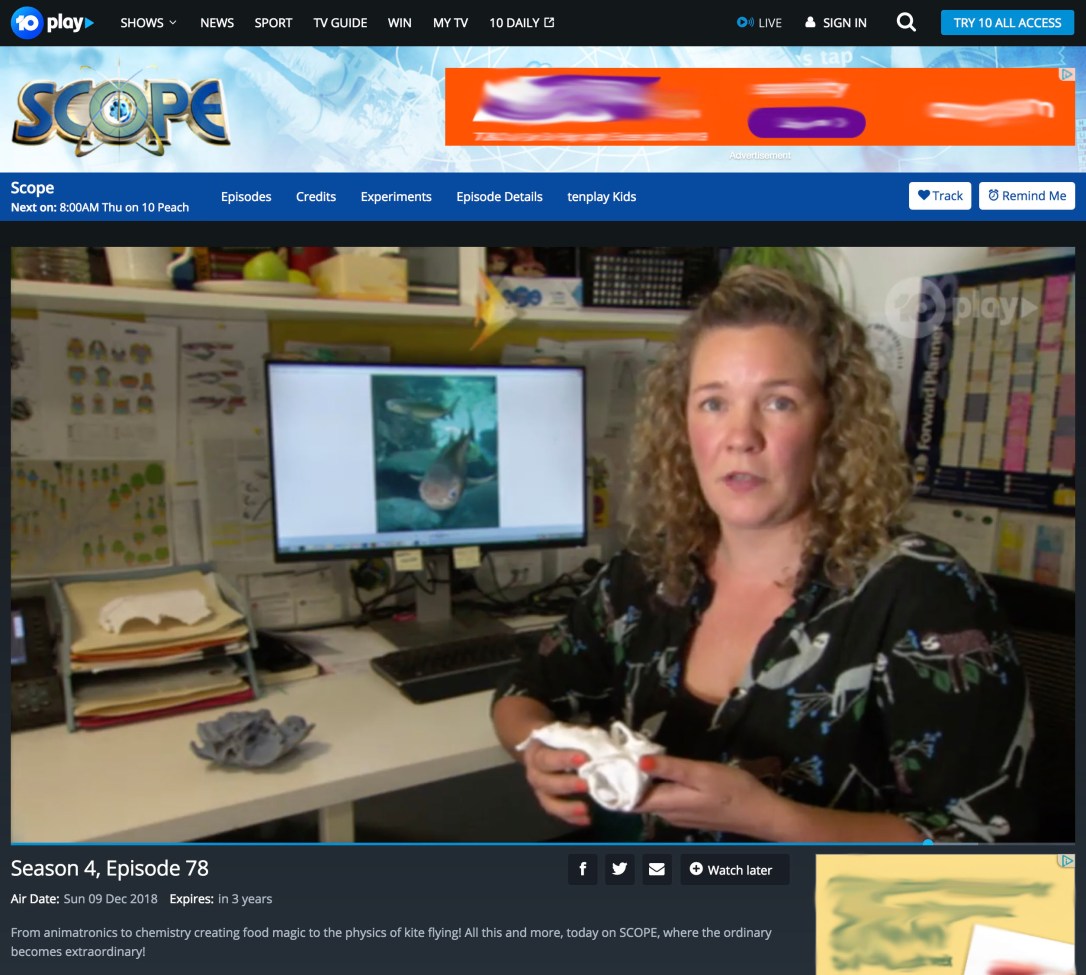
If you’re still feeling a little shabby this morning and not ready to race out into the new year just yet, then why not settle down with a cup of tea for an episode of Scope TV? Scope is a “fast, funny and informative children’s science show produced in association with the CSIRO…. created to demystify the world of science and technology, and make it relevant, accessible and above all fascinating to a young audience”.

My research on the stem-osteichthyan (early bony fish) Ligulalepis, was featured in Season 4, Episode 78 (I’m on between 17:56-20:47). You can watch the full episode here:  https://tenplay.com.au/channel-eleven/scope/season-4/episode-78 , or if you are watching from outside Australia or want to skip straight to my segment click HERE

I hope you enjoy it (no, not that fish!)
ScopeTV Alice

PalAss, Bristol

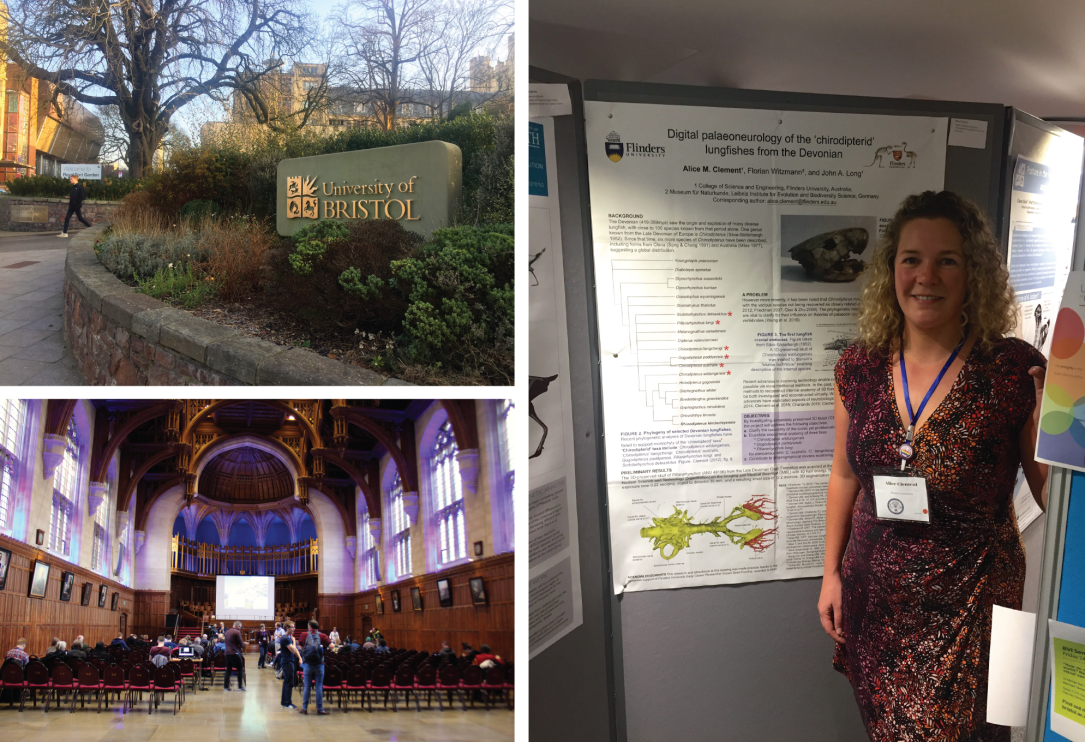
The final leg of my Europe trip took me to Bristol, in Somerset, England. The Annual Meeting for the Palaeontological Association was held in and around the University of Bristol and the city Museum over four days this December.

The conference kicked off with a special symposium “Frontiers and Advances in Dinosaur Palaeobiology” on Friday in the impressive Great Hall in the Wills Memorial building, followed by regular sessions over the weekend. The social programme was almost as busy as the scientific one, with many opportunities to socialise and network with fellow palaeontologists.

PalAss

I presented a poster on the “Digital palaeoneurology of the ‘chirodipterid’ lungfishes from the Devonian” – outlining one of my current projects on the fossil brains of an iconic group of fossil lungfish. It was my first experience presenting a poster rather than an oral presentation, and as such, I found the whole experience much more relaxing than usual!

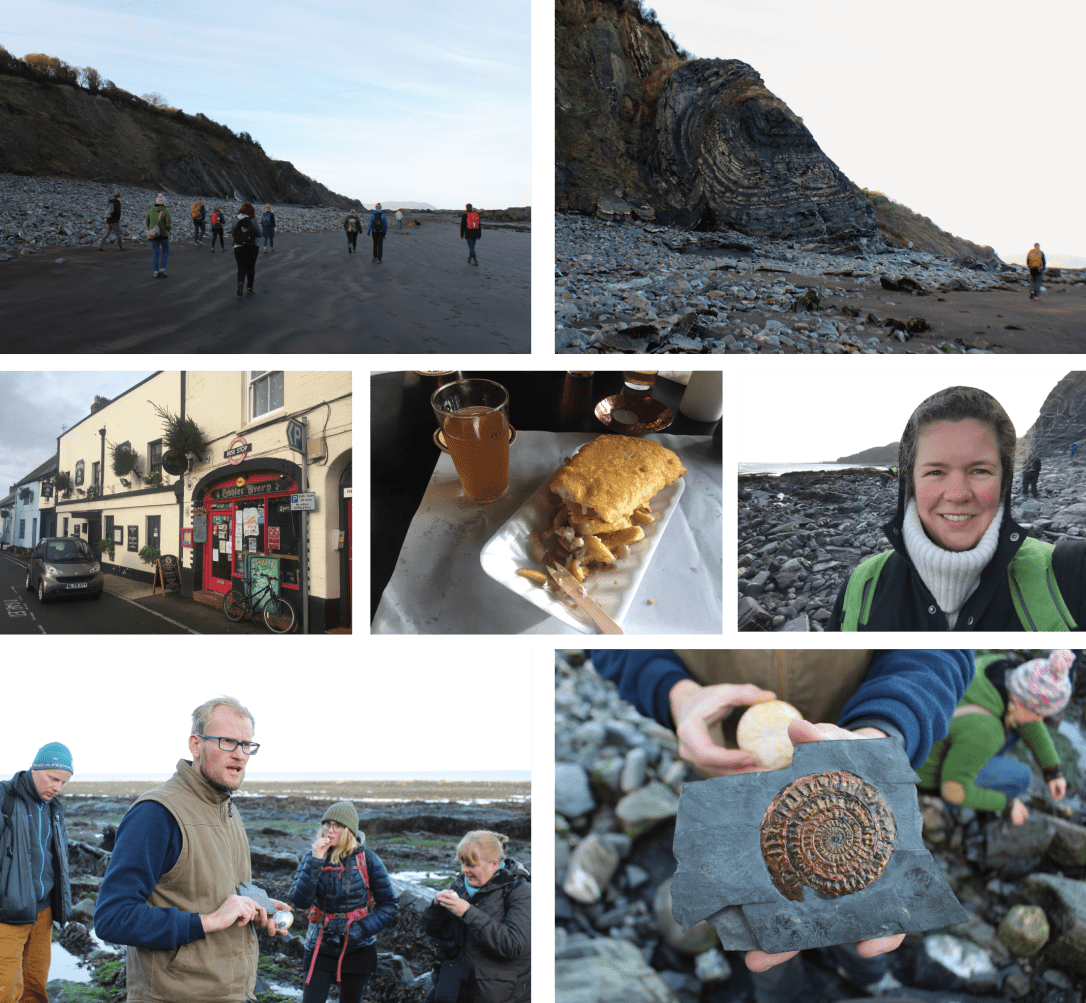
Monday took us to the Somerset coast on a cold but clear day to inspect the Triassic-Jurassic section on the beach at Watchet. We searched for beautiful nacre “mother-of-pearl” ammonites and ichthyosaur bits, then enjoyed traditional fish and chips at the local pub and a pint (or two) of delicious cider. Many thanks to Dr Jakob Vinther (bottom left image) and colleagues for a very well organised, highly informative and fun meeting and field-trip.

Fieldtrip

ESRF, Grenoble

What would you like to do on your 30th birthday? Shut down for two years and replace your major organs? It may not sound like an ideal celebration, but that is what the European Synchrotron Radiation Facility (ESRF) will do this December.

The world’s first third-generation synchrotron light source (ESRF) was built in 1988, and will pause the world’s “most intense X-rays for research” to enable the construction of a new storage ring and the addition of even more beam lines. The Extremely Brilliant Source (EBS) is not scheduled to come back online until late 2020.

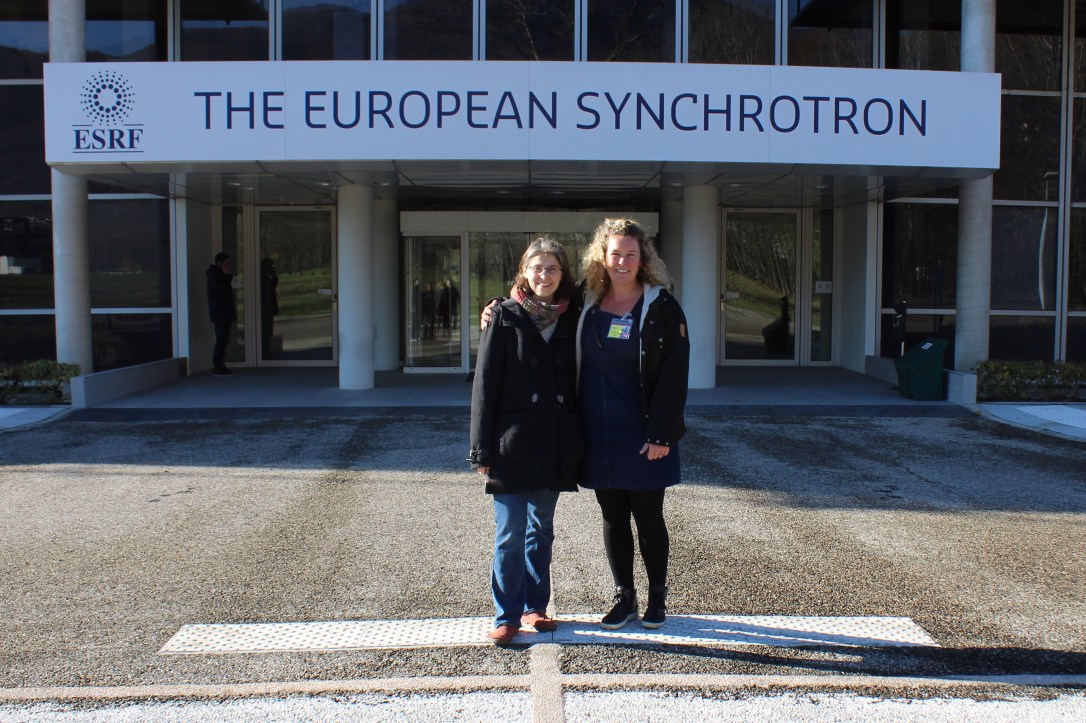
I feel especially lucky to have been here in beautiful Grenoble this week working with colleagues from Uppsala University, Sophie Sanchez and Per Ahlberg, on the very final experiment on beamline ID 19 before the scheduled shutdown. ESRF is the only synchrotron in the world with a beam powerful enough to perform this experiment at the super high resolution required (down to 0.7μm voxel size!).

IMG_4637Per and Sophie inspecting a mounted specimen on the ID19 beamline at ESRF

During 72 hours of beam time, we work 24/7 with help from ESRF researcher, Paul Tafforeau, to scan as many specimens as possible. Sophie’s project is looking at the bone histology of the fins and limbs over a number of significant evolutionary transitions: the fin-limb, water-land, and the characteristics that appear in the first amniotes (animals that lay a waterproof egg, e.g. the first reptiles).

Bone histology, microanatomy and skeletochonology can be remarkably informative about the lifestyle and life history traits of an animal. For example, the bone microstructure can indicate whether an animal matured quickly, or had a long juvenile phase – as shown recently by Sophie and colleagues in Sanchez et al. (2016) and other works.

Untitled-1Alice setting up a specimen (left), and Laugia, a Triassic coelacanth from Greenland (right), scanned at the ESRF
Skeletochronology works on the same concept as counting tree rings in trees, and can map various changes in life history, development and physiology inside the bones of an animal. And very significantly for these experiments, the structure of the bone can indicate whether the bone was capable of sustaining an animal’s weight on land, or if it must have remained buoyant in the water.

It’s been an exhausting yet exciting few days scanning many stunning specimens sourced from all over the world. I look forward to continuing our work on these projects in the coming years (and catching up on some sleep!)

IMG_4617Alice and Sophie at the ESRF in December 2018

Berlin Museum für Naturkunde

I’ve had a wonderful few days working at the Berlin Natural History Museum. I was interested to see the original specimen of a lungfish (Chirodipterus wildungensis) that was the first to have the internal space for the brain described. This was achieved over 65 years ago using the “shatter method” (which is destructive as it sounds!)

Berlin

I am also interested in a small coelacanth skull, called Euporosteus eifeliensis, from the Devonian of Germany (~383-388 million years ago). It is preserved in 3D and is only known from a single specimen!

To study both the fossil lungfish and coelacanth, I used the traditional method of making observations using a microscope, but also will 3D model them both using the museum in-house CT scanner and segmenting software back in Adelaide.

Florian

I’m so very grateful to Dr. Florian Witzmann, curator of fossil fish and amphibians, and Dr. Kristin Mahlow, who works in the CT lab, for their assistance this week. I’m looking forward to continuing our collaboration together.

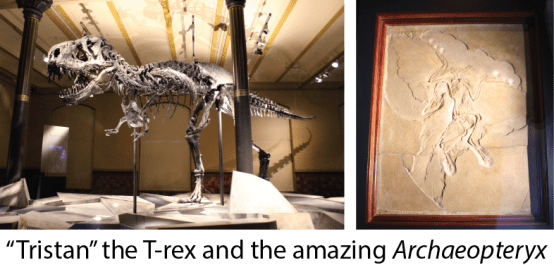
Another perk of working in the museum was the opportunity to browse through their galleries, which include a beautiful Archaeopteryx specimen on display, as well as a visiting T-rex skeleton called Tristan. As one of the best preserved and most complete T-rex skeletons in the world, he was very impressive!

Trex

New “stem-tetrapod” paper out today!

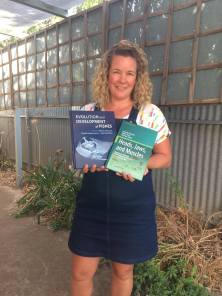
I’ve just surfaced in Berlin and my jet lag-addled mind is pleased to see my latest paper, co-authored with my Flinders University colleagues, John Long and Brian Choo, published today in the Earth and Environmental Science Transactions of The Royal Society of Edinburgh (now that’s a mouthful!).

The paper is entitled “New Insights into the origins and radiation of the mid-Palaeozoic Gondwanan stem tetrapods.” In it, we provide new detail about Koharalepis, a fish from the Middle Devonian Aztec Siltstone of Antarctica, using 3D synchrotron data. We also propose some alternate biogeographical and phylogenetic models of stem tetrapod origins and radiations with a distinctly Gondwanan perspective (remembering that Gondwana was the great southern supercontinent that Australia and Antarctica were once a part of).

The paper forms part of a special volume written in honour of Prof. Jenny Clack, who has been seminal in studies of the “fish-tetrapod” transition, and who wrote the absolutely wonderful Gaining Ground: the Origin and Early Evolution of Tetrapods. It has been an absolute honour to get to meet Jenny at various conferences over the last decade, and her impact to the field of early vertebrate evolution shall never be forgotten.


Planetarium “Supernovas”

I was honoured to be asked to speak to the Adelaide Planetarium “Supernovas” this week. The “Supernovas” are astronomy students who meet at the planetarium to keep their knowledge of celestial objects up-to-date, with lectures by invited speakers from other disciplines each month.

My talk was entitled “Fish, Fossils and Brains” and I got to speak about my favourite avenue of research, palaeoneurology. Palaeoneurology is the science of fossil brains and neurobiological evolution. The discipline was founded by Tilly Edinger in the 1920s when she described the natural endocast (mould of the internal cavity of the skull) of the Mesozoic marine reptile, Nothosaurus. Prior to Tilly’s work, scientists only compared the brains of living animals without any input from the geological record.

I’m most interested in the changes that occurred across the fish-tetrapod transition. The “lobe-fins” (Sarcopterygians) comprise nearly half of all vertebrate species, and unravelling the major innovations that occurred in the brains of the first tetrapods (the earliest terrestrial vertebrates) is pivotal for understanding our very own neural evolution.

It was especially cool to be treated to a show inside the planetarium after my talk. Many thanks to Paul Curnow (in the photo below) for the invitation and to the “Supernovas” for their interesting and thought-provoking questions. 46508856_367621303981484_9000653724581888_n

Science Says!

Tonight I’ll be appearing as a panellist for Science Says! – an event put on by The Science Nation and held at the Royal Institution of Australia (RiAus) Science Exchange, Adelaide.

The night will be hosted by Dr Joel Gilmore, and is described as “an evening in the style of the great panel shows – think … Mock the WeekSpicks and Specks, and just a dash of QI.

“Competing in Adelaide for all the glory science has to offer is:

  • futurist and director of MOD at UniSA, Dr Kristin Alford;
  • women’s health scientist, advocate and communicator, Dr Hannah Brown;
  • palaeontologist, Royal Society of South Australia membership secretary and ex-underwater rugby player, Dr Alice Clement;
  • evolutionary biologist and manatee enthusiast, Jenna Crowe-Riddell;
  • chemist and the former face of Adelaide, Dr Noby Leong;
  • and science communicator and founder of the Alan Duffy appreciation society, Dr Andy Stapleton.”

It kicks off at 4pm, and tickets are just $15 at the door. Hope to see you there!
Please find the full event details on the Facebook page.

Science Says!

DSC02338