Traipsing the Tournaisian, meandering the Mississippian, perusing the Pennsylvanian… (ISELV fieldtrip)*

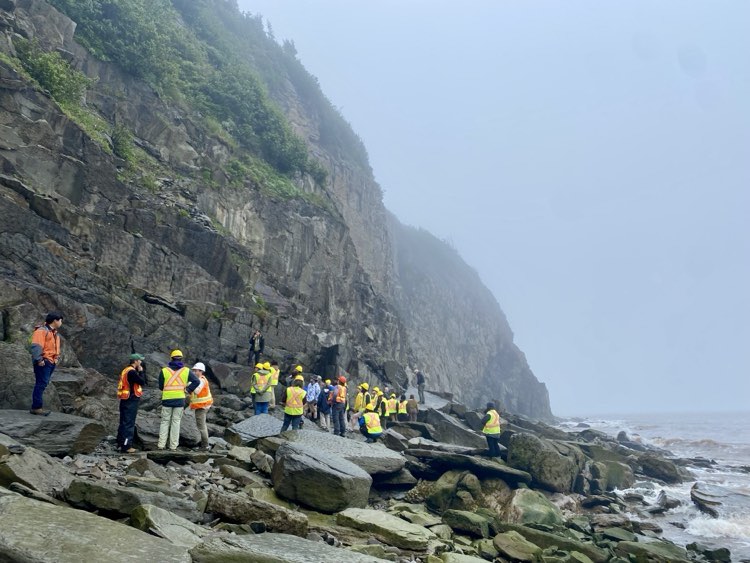
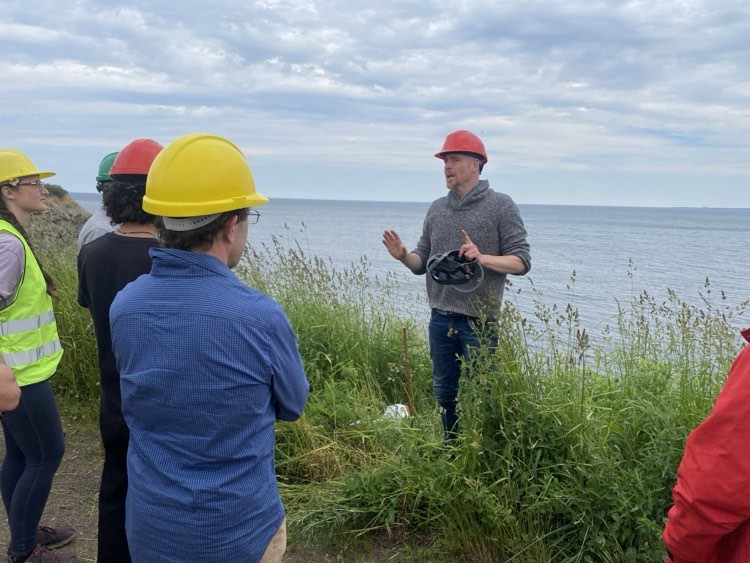
Following on from the fabulous meeting that was the 17th ISELV in Rimouski and Miguasha, Quebec, I was also fortunate to attend the post-conference fieldtrip. Led by Dr Tetsuto Miyashita (from the Canadian Museum of Nature), 30+ participants were led through various Carboniferous age sites (299-359 million years ago) in eastern Canada.

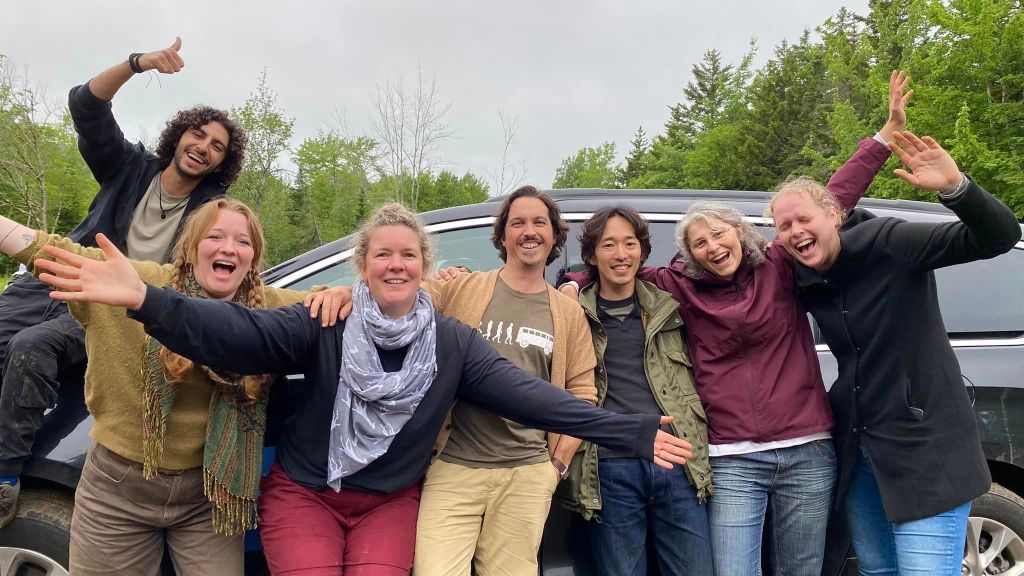
The “cool” car: Amin El Fassi, Merle Greif, Alice Clement, Jorge Mondéjar Fernández, Tatsuya Hirasawa, Sophie Sanchez & Sifra Bijl.

First, in New Brunswick we visited the Stonehammer UNESCO Global Geopark, located across the unceded territory of the Wolastoqiyik, Peskotomuhkatik and Mi’kmaq peoples. It encompasses ~2,500 km in Southern New Brunswick with a 1 billion year geologic history.

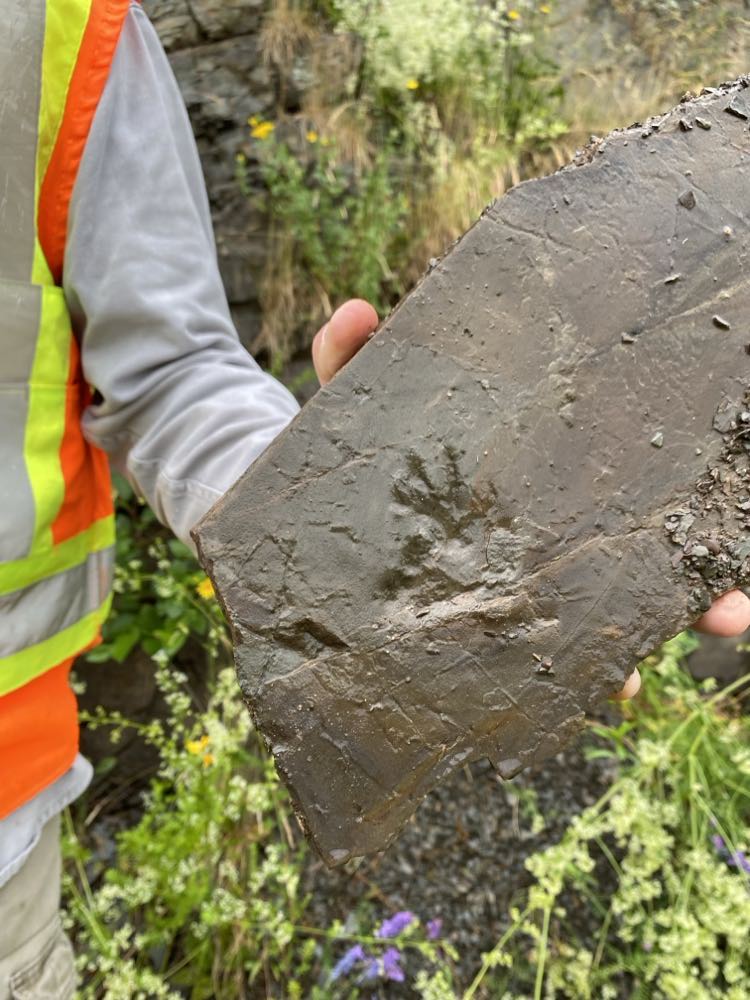
Matt Stimson (New Brunswick Museum) and team guided us across some Devonian-Carboniferous transition sections, many of which we accessed on the side of a highway! Some nice tetrapod footprints, and various other fishy bits were discovered.

On Day 2 we visited the Albert Mine, a Mississippian Lagerstätte (this is a German term used to describe a fossil site with exceptional preservation, either in quantity or quality). Pleased to say I found a pretty nice little actinopterygian (ray-finned fish) at this site! We also visited the dramatic Cape Enrage, (named so for the rough seas and turbulent waters) near the entrance to the Bay of Fundy National Park. Here we were deafened by the sound of the sea, but treated to impressive fossil log jams in the exposed cliff faces.

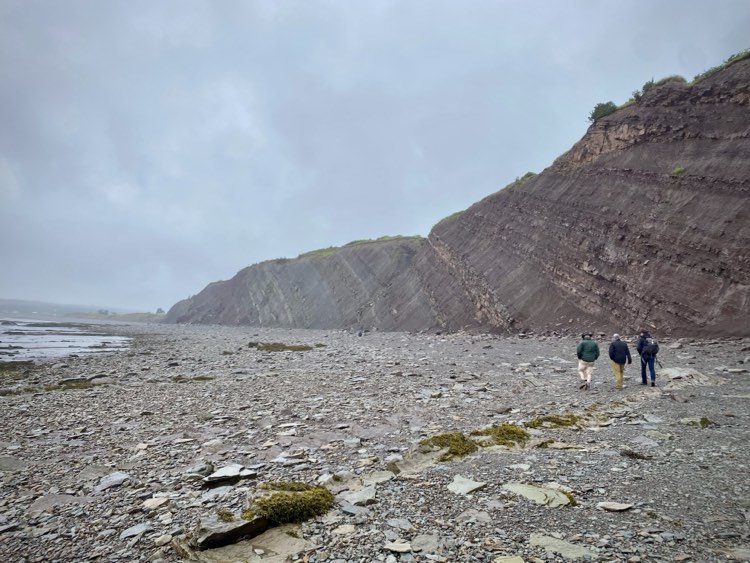
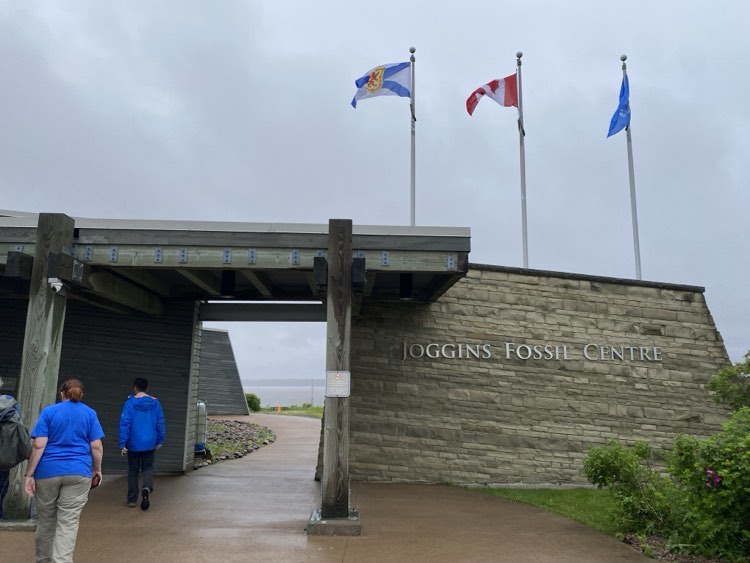
On Day 3, we left New Brunswick for Nova Scotia, braved an onslaught of rain and visited the UNESCO World Heritage site of Joggins Fossil Cliffs. This site is famous for the preservation of a small tetrapod called Dendrerpeton, (a type of temnospondyl amphibian) which was found fossilised within the stumps of lycopsid trunks. We could easily find plentiful fossils from many types of ancient plants from this now extinct Carboniferous forest scattered across the beach and in the cliffs.

Day 4 saw us continue across Nova Scotia to visit the beautiful sites of Cape Breton. We were graced with some blazing sunshine (yippee), stunning scenery, and the very friendly, knowledgeable and helpful Dr Jason Loxton. He welcomed us at the charming Cape Breton Fossil Centre, before guiding us to the Pennsylvanian tree stump localities in Point Aconi. Again there were textbook examples of stratigraphy, abundant fossils, and lovely scenery (some seals were curiously watching us from just off shore).

On our final day, we finished on a high with a visit to the Blue Beach Fossil Museum and were free to explore the beach in search of our own fossil finds. Blue Beach is also well known for its diverse fossil fauna, including both Late Devonian and Carboniferous faunas, as well as a rich tetrapod trackway (footprint) record.

We finished our fieldtrip with a lively group dinner in the charming city of Halifax, before saying our goodbyes and travelling on our separate ways. It was a wonderful week visiting these world famous sites and finding many fossils, and having a lot of fun with colleagues along the way. I’m looking forward to ISELV no. 18 in Morocco 2026 already!

*NOTE: if you are curious about my title for this blog entry, then let me explain. The various time divisions within the Carboniferous Period have their own names, some of which include the Tournasian, Mississippian, Pennsylvanian and so on…

ISELV no.17

This month I attended the 17th International Symposium on Early and Lower Vertebrates in Rimouski and Miguasha, Québec, Canada. It’s usually always my absolute favourite conference, and this year’s version was no exception…

The “early and lower vertebrate people” includes everyone like me who loves studying fish, amphibians (and perhaps even a few reptiles too). The talks cover aspects of developmental biology, evolution, anatomy, and with a big focus on palaeontology.

It’s a great catch up with colleagues and collaborators from all over the world. The 17th ISELV had ~85 participants from 20 countries who gathered for four days of talks at UQAR, then two fantastic days at the UNESCO World Heritage fossil site and research facility at Parc national de Miguasha.

A group photo of the attendees of the 17th ISELV meeting (Canada 2024).

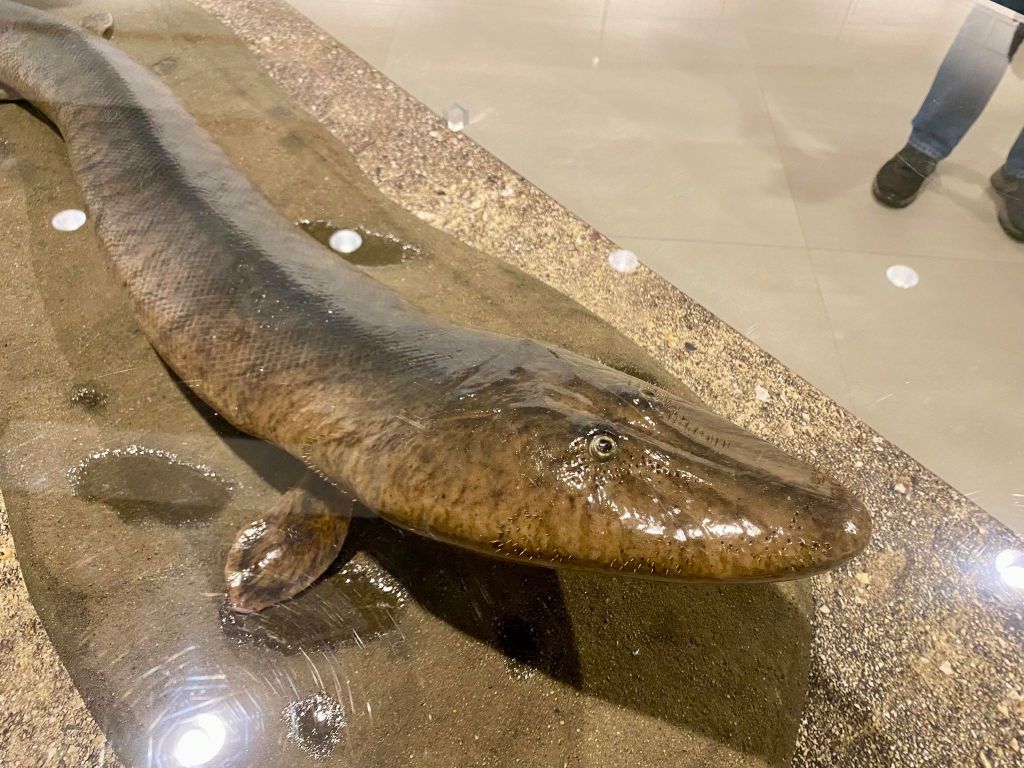
Visiting Miguasha felt like a pilgrimage of sorts, to see the site where famous fossils like Eusthenopteron, probably the best-known Palaeozoic fish, comes from. It was also amazing to see the site, and the exhibition celebrating “Le Roi de Miguasha” (the King of Miguasha), Elpistostege watsoni.

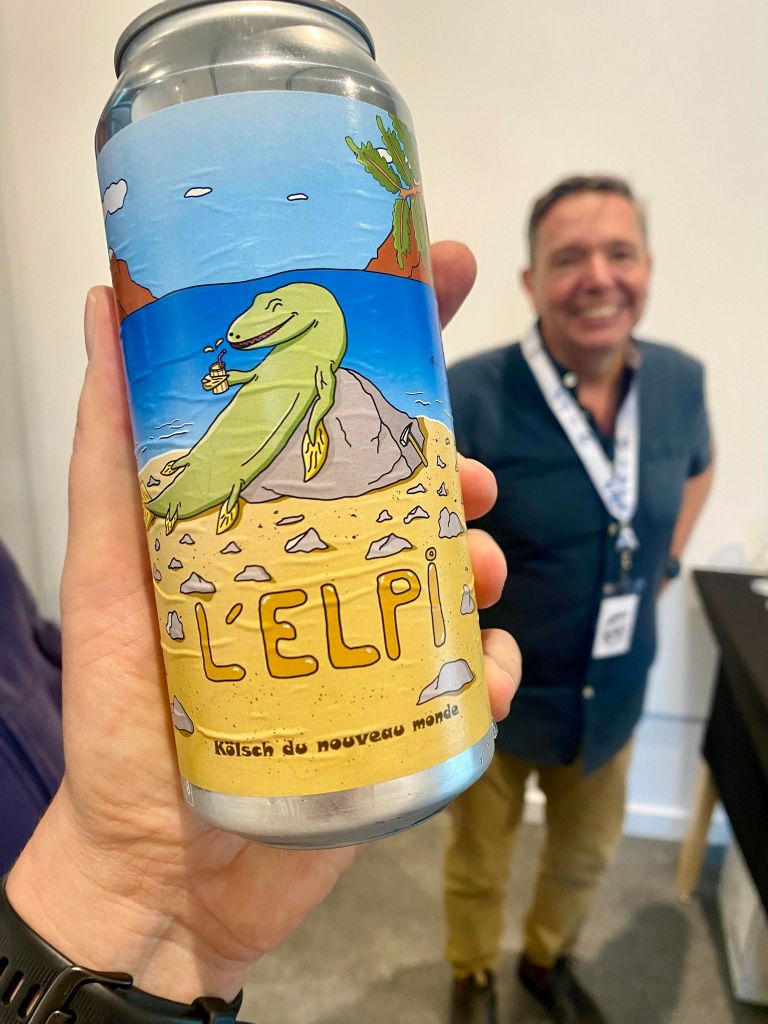
I was privileged to work with Prof Richard Cloutier and others on this taxon, which resulted in our publication on the origin of the vertebrate hand in 2020. Despite having worked on “Elpi”, I had never seen the fossil in real life so it was very exciting for me (he’s even more beautiful in real life). Elpi was celebrated accordingly being featured on t-shirts, a specially-brewed conference beer, cupcakes and other museum shop merchandise.

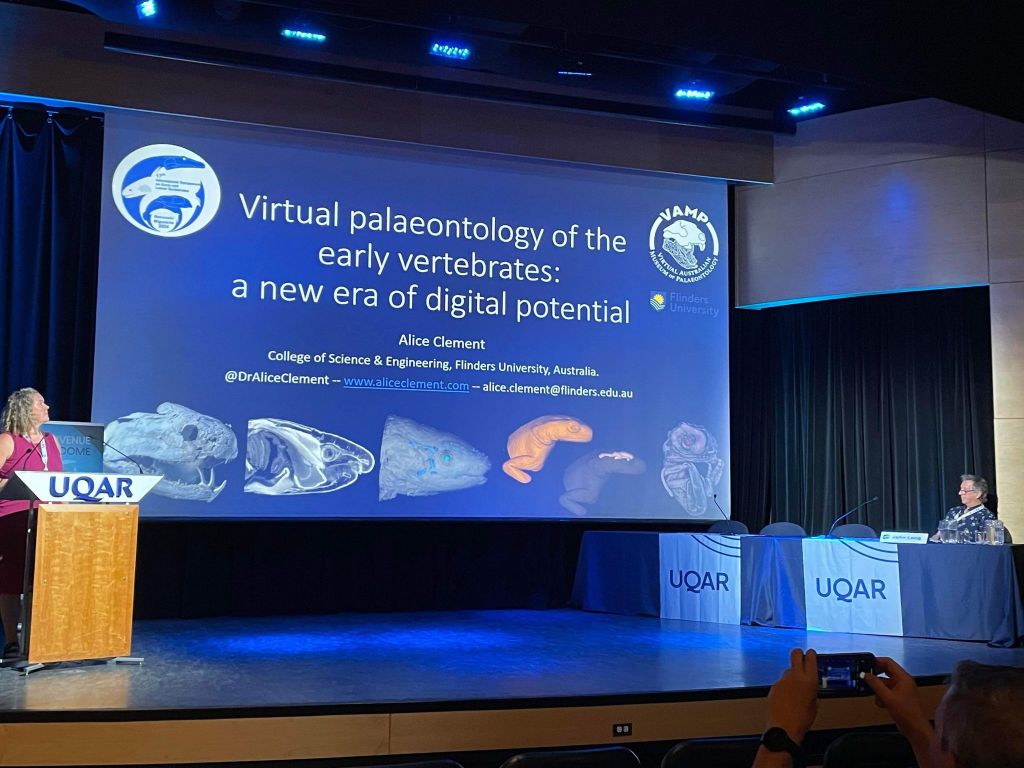
I thoroughly enjoyed the opportunity to present a keynote lecture during the meeting on “Virtual palaeontology of the early vertebrates: a new era of digital potential” outlining some current projects from our lab group.

Dr Alice Clement (Flinders University) giving a keynote lecture at ISELV, Canada.

I was particularly pleased to get to ISELV this year after missing the last meeting in Valencia (2022). A huge thanks to Richard Cloutier, Tetsuto Miyashita, and their team of volunteers who helped make this one of the best meetings yet! Next, looking forward to Morocco in 2026!

Hello Harajicadectes (is that you grannie?)

Meet Harajicadectes, your 380 million year old great, great, great (etc) Grannie.

This fish, which was given the full name Harajicadectes zhumini, was described by myself and other colleagues, published this week in the Journal of Vertebrate Paleontology “A new stem-tetrapod fish from the Middle–Late Devonian of central Australia“.

This is a tetrapodomorph, or tetrapod-like fish, from ancient rock deposits in central Australia. This means this fish is more closely related to tetrapods (amphibians, reptiles & mammals), than it is to a salmon, for example. It bears important features suggesting it was capable of air-breathing, among other things.

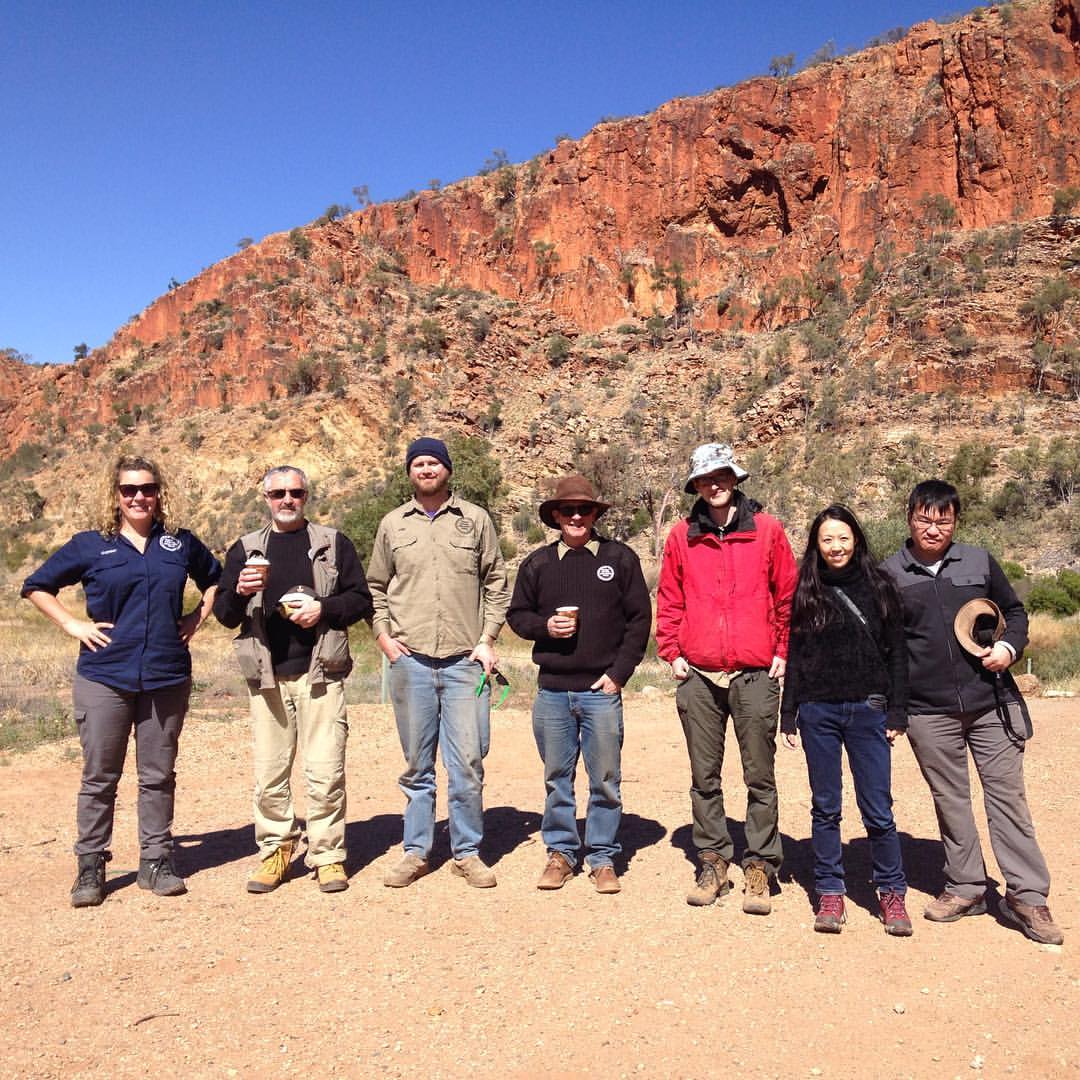
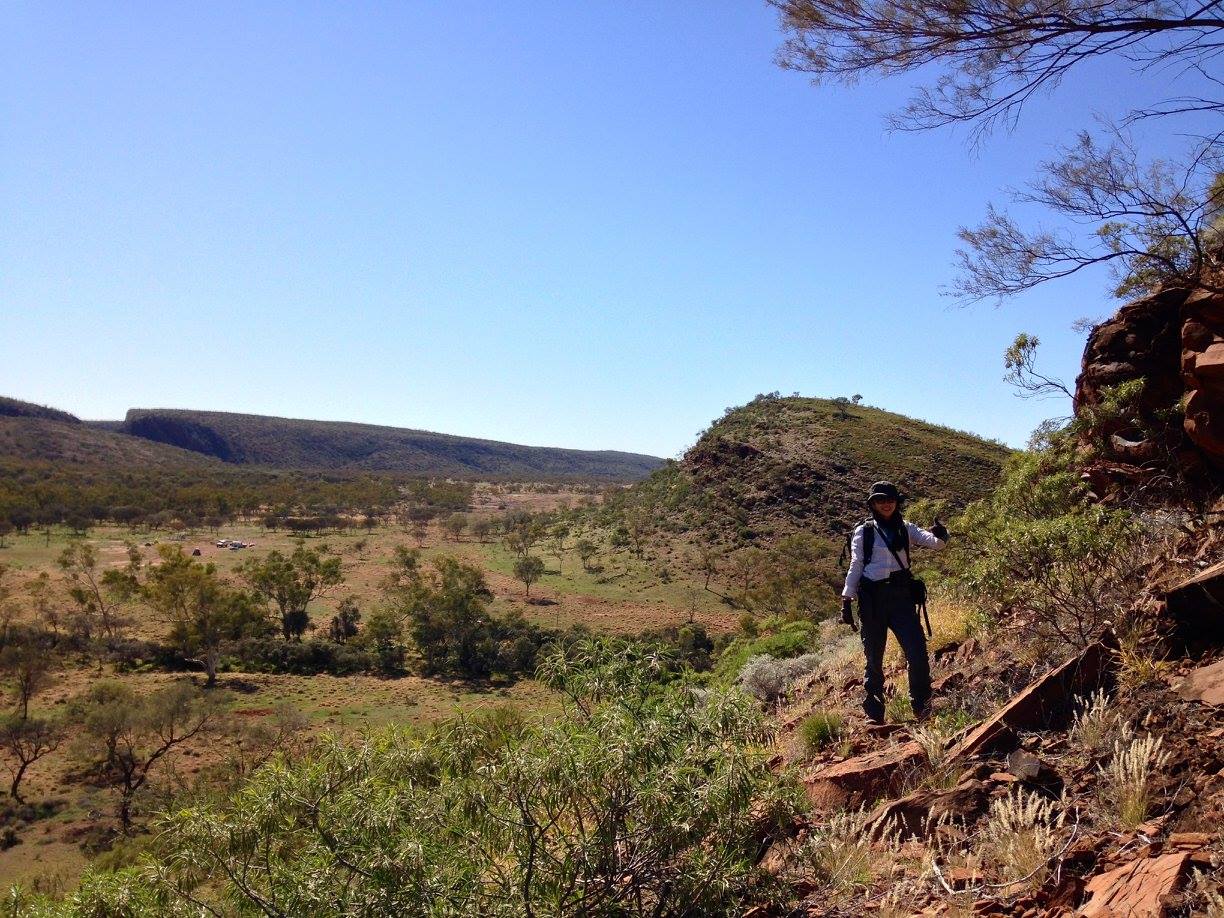
Bits and pieces of this fish have been found since the 70s by Gavin Young (ANU) and Alex Ritchie (Australian Museum), among others. However it wasn’t until a Flinders University field trip (with colleagues from ANU & MAGNT) to the area in 2016 uncovered the first complete specimen of Harajicadectes. Finally, all the little bits and pieces could confidently assigned to a single species.

Dr Brian Choo led this paper and is the artist behind the beautiful life reconstruction of this extinct predatory fish from an ancient central Australian river. No doubt there are many more treasures lying in wait to be discovered in the rocks of outback Australia!

Harajicadectes zhumini (Choo et al. 2024). Artwork by Brian Choo.

If you would like to red more about this beastie, find our article published in The Conversation, “A 380-million-year old predatory fish from Central Australia is finally named after decades of digging.”

A Podcast About Dead Things

EXTINCT! The perfect name for a podcast about dead things…. I was interviewed by the creator of Extinct, Alice Leggett, a journalist, podcaster, and wildlife enthusiast recently to talk about the BEST FISH of all time (lungfish, obviously).

We chat about what sparked my own interest in lungfish, lungfish fossils, air-breathing, anatomy, brains, extinction risk, VAMP, and much more.

My episode goes live today, listen wherever you get your podcasts, or via the following link: https://linktr.ee/extinctpodcast

CAVEPS 2023

What is the collective noun for palaeontologists? An assemblage? A formation? A museum? Whatever it is, there was a big one last week in Melbourne/Naarm, Australia, for the 18th Conference on Australasian Vertebrate Evolution, Palaeontology & Systematics (CAVEPS 2023).

Some >180 attendees from Australia, New Zealand and beyond gathered to share their research on all aspects of the evolution and palaeontology of vertebrate animals (animals with a backbone). It was a very exciting and promising indication of the future of palaeontology in our region with more than half of all attendees being students (who often gave the best presentations).

It was a busy week for me, giving a presentation in the “Synchrotron Imaging” workshop on Monday, presenting a poster (VAMP!) and giving one of the plenary lectures (alongside Tim Flannery & Kliti Grice).

A very important and insightful component was the session about why palaeontologists need to collaborate with First Nations people, facilitated by Jillian Garvey and Steve Salisbury. I was very pleased to see the beginnings of some (hopefully) meaningful change in our discipline and look forward to seeing how our approaches evolve in the years to come.

Attendees of the 18th CAVEPS, Melbourne/Naarm, 2023 (with Siderops for scale).

A big thank you to the organisers for a wonderful meeting, and I hope everyone is looking forward to the next one, to be held in Adelaide in 2025!

ICCB 2023, Vienna

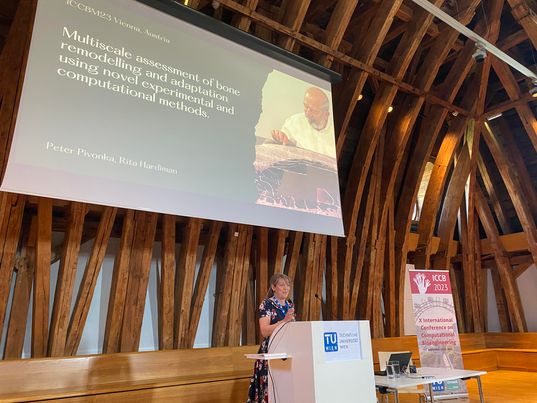
I’ve been attending ICCB, the 10th (X) International Conference on Computational Bioengineering in Vienna, Austria, this last week.

Among all the talks about blood, cells, and organs, there were plenty of sessions in honour of the great mineralized tissue of vertebrates, bone. In fact I was here specially to attend a session with the title: Multiscale assessment of bone remodeling and adaptation using novel experimental and computational methods.

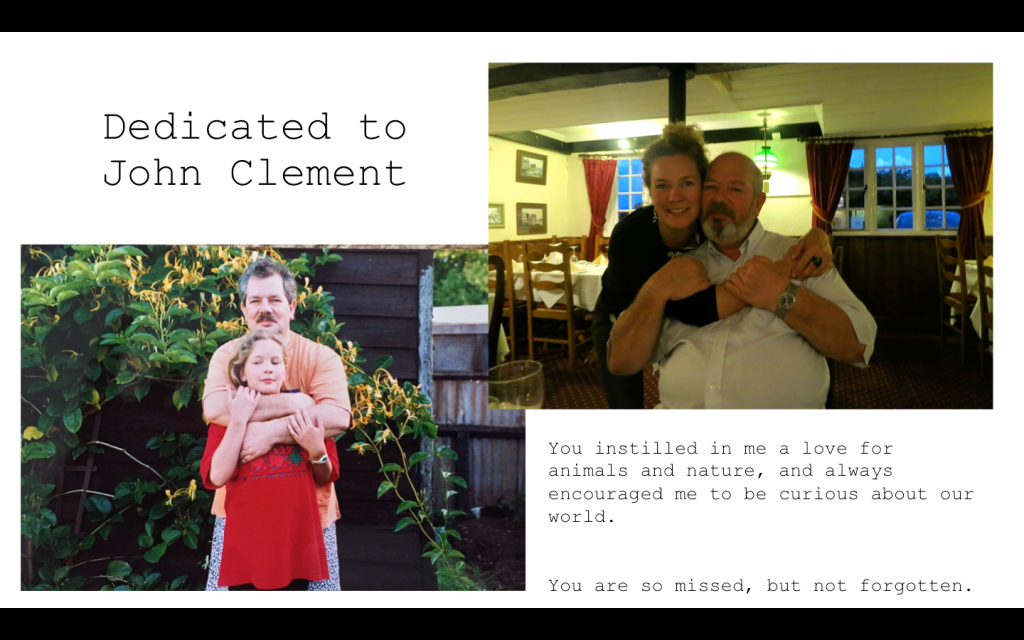
This mini-symposium was dedicated to my late father, Prof John Clement (former Chair in Forensic Odontology, University of Melbourne, Australia). Dad was a scientist who worked across many disciplines, one of which was tissue science with a focus understanding bone tissue at different scales.

Read more: “Scientist and doyen of forensic dentistry driven by a sense of fairness and a desire to help others

I was honoured to have been considered and accepted to speak in this session, and gave a talk highlighting how myself and colleagues are using novel imaging methods, like CT scanning, to image palaeontological bones over the fish-tetrapod transition. It was an incredibly difficult presentation to give but I hope Dad would have been proud.

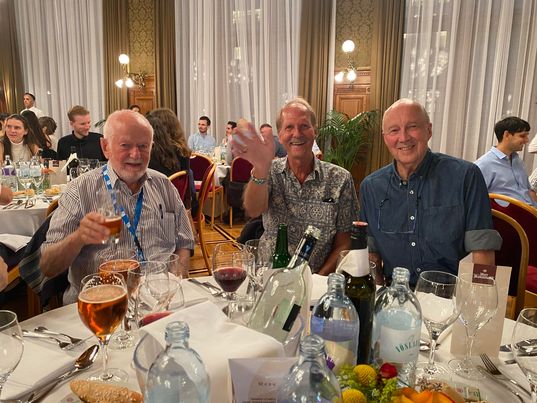
The best thing about it all was to see so many of Dad’s old colleagues, students and friends, and hear from several others who had collaborated with him. His scientific legacy lives on with much research still being done in particular on the Melbourne Femur Collection, which he initiated.

Many people reminisced with fond or funny memories about him, and several people noted how good he was at bringing people together.  And even five years since he died, he was still bringing scientists from all over the word to Vienna to talk all about bone. I’m sure he would have enjoyed the sessions immensely if he could have been here. Huge thanks to the symposium organisers, Peter Pivonka, Rita Hardiman, David Cooper & David Thomas, for making it happen.

Alfred Russel Wallace

Do you know who proposed the idea of evolution through natural selection in 1858? You could be forgiven for answering this question with “Why, Charles Darwin, of course!” But did you know that Darwin wasn’t alone in conceiving and communicating his theory of evolution some 165 years ago?

Alfred Russel Wallace was an English naturalist, explorer and geographer who independently conceived the theory of evolution through natural selection at the same time as Charles Darwin. Although, Alfred Russel Wallace and his contributions have always remained less celebrated than those of Darwin.

By London Stereoscopic and Photographic Company (active 1855-1922) – First published in Borderland Magazine, April 1896, Public Domain, https://commons.wikimedia.org/w/index.php?curid=27755581

Wallace published “On the Tendency of Varieties to Depart Indefinitely From the Original Type“, notes from which, Wallace had sent to Darwin as he was finishing his own contribution to the topic, “On the Origin of Species by Means of Natural Selection, or the Preservation of Favoured Races in the Struggle for Life” (catchy titles in those days!)

Aside from the theory of evolution, Wallace was an avid explorer fascinated by geography and biology. The combination of these fields is known as biogeography, and describes the distribution of species in both space and time. Wallace conducted extensive fieldwork throughout the Amazon River basin and the Malay Archipelago (the Indo-Australian Archipelago).
It was in this region where Wallace identified an apparent divide between the fauna in the western portion (where the animals are largely of Asian origin), and an eastern portion (where the animals had a more Australasian flavour). This was termed the Wallace Line. For this, and other work of his, Wallace is sometimes described as the father of biogeography.
Artwork created by Jacob Blokland.

This years marks 200 years since the birth of Alfred Russel Wallace, and so the Royal Society of South Australia (of which I am Vice President), and the Royal Geographical Society of South Australia have joined forces to celebrate the life and legacy of this incredible scientist. With support from Inspiring Australia and as part of National Science Week we will hold a special event this Thursday 31st August in Adelaide, Australia, “Lines in the Sand: 200 Years of Alfred Russel Wallace”.

We’ve got four incredible scientists coming to speak to us about fauna across the Wallace Line today, covering everything from butterflies to sea snakes to small mammals. Including:

  • Dr Kevin Rowe (Museum Victoria) Crossing lines and diversifying opportunities: Repeated radiations of small mammals through Wallacea
  • Dr Yi-Kai Tea (University of Sydney/Australia Museum) Chasing butterflies. A celebration of biodiversity across Wallacea
  • A/Prof Kate Sanders & Dr James Nankivell (Uni Adelaide) Here and back again, a snake’s tale

It is shaping up to be an incredible night, with tasty Indonesian food and local South Australian wine provided. We’ve got limited in-person seats, so book your ticket NOW! However, if you can’t join us in person on the night, then we do offer an online version as well. I hope to see you there.

Register here: https://www.eventbrite.com.au/e/lines-in-the-sand-200-years-of-alfred-russel-wallace-om-frs-tickets-693784406837

ICVM, Cairns

This week I was lucky enough to attend the International Congress of Vertebrate Morphology in Carins, northern Queensland, Australia. What exactly does that mean, you might ask? This is a meeting held every three years for researchers who love to study the size, shape, and form (morphology) of vertebrates, that is, animals with a backbone.

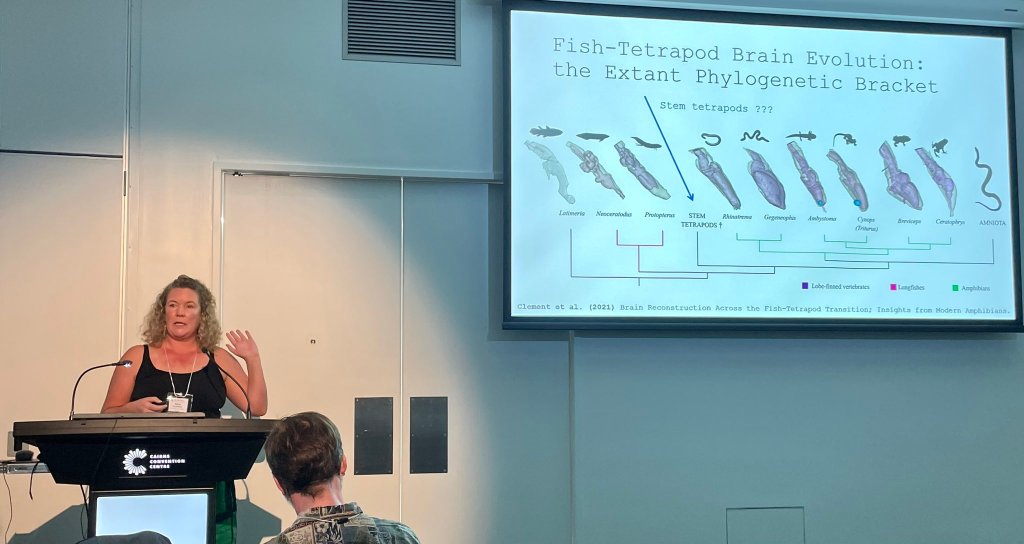
I was honoured to be invited to speak within a special symposium looking at New Approaches to Vertebrate Brain Evolution. I spoke about how I’m trying to understand how the brain changed in animals as they evolved over the water-land transition hundreds of millions of years ago.

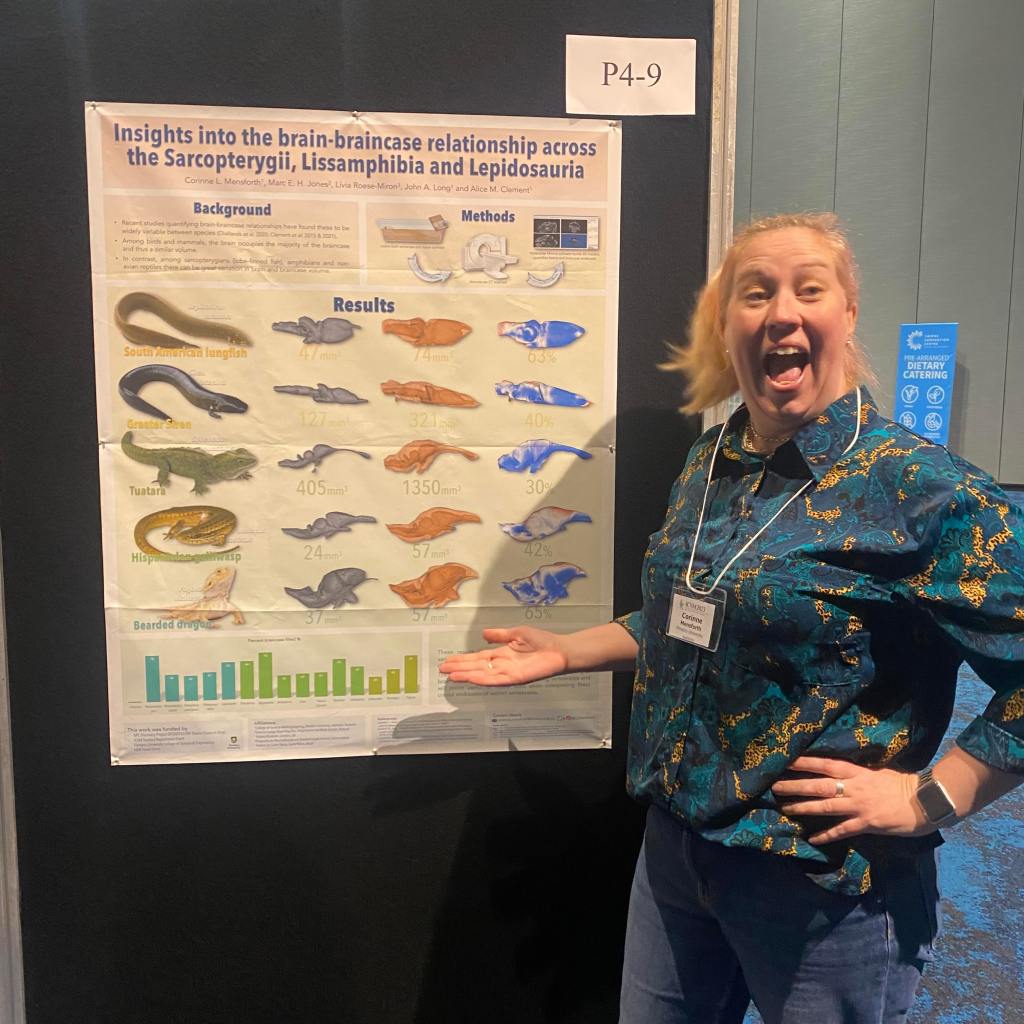
There were hundreds of amazing talks from fascinating presenters on everything from brains, bones, biomechanics and breathing (and much, much more). I was especially pleased to see two of the students from our lab attend the conference and show their work during the poster sessions.

Corinne Mensforth presented Insights into the brain-braincase relationship across the Sarcopterygii, Lissamphibia and Lepidosauria, while Josh Bland had a poster all about Using Finite Element Analysis to Interpret the Feeding Biomechanics of Devonian Lungfish Jaws. I’m very proud of the both of them.

Cairns in tropical QLD was a stunning setting for this meeting, with many attendees beside themselves with excitement seeing our amazing and unique Australian fauna. I was very glad to escape the cold winter of southern Australia for a week of warmth and amazing science, and catching up with colleagues from all over the world. I very much look forward to the next ICVM, due to be held in Canada in three years’ time.

VAMP is born

Speaking of digital palaeontology… Welcome to VAMP, the Virtual Australian Museum of Palaeontology! Together with some colleagues from the Flinders University Palaeontology lab, we have created an online museum that you can access from any computer or smart phone. Via our online museum, we are scanning, sharing and celebrating 600 million years of spectacular digital Australian fossils in 3D.

VAMP has more than 500 scans of Australian fossils, ranging from the earliest enigmatic early cellular life of the Ediacaran Period, to recently extinct megafaunal giants (and much more in between!) We have more than 30 scans of trace fossils, such as animal footprints, more than 30 genera of Australian vertebrates, and bespoke teaching sets available for educators.

Best of all, the website is completely free for you to explore and interact directly with 3D models of rare Australian fossils.

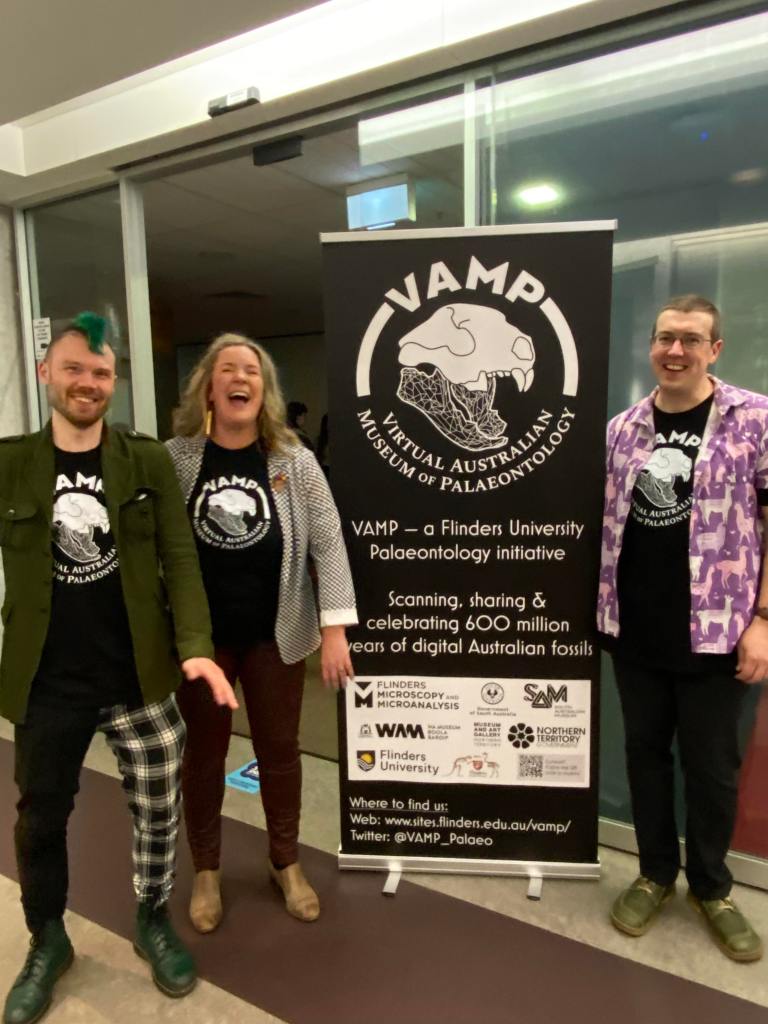
VAMP launched officially last night at an event held at Flinders University at Victoria Square, Adelaide, Australia. It has been fabulous to work with Jacob van Zoelen and Aaron Camens in the leadership team to bring VAMP to life.

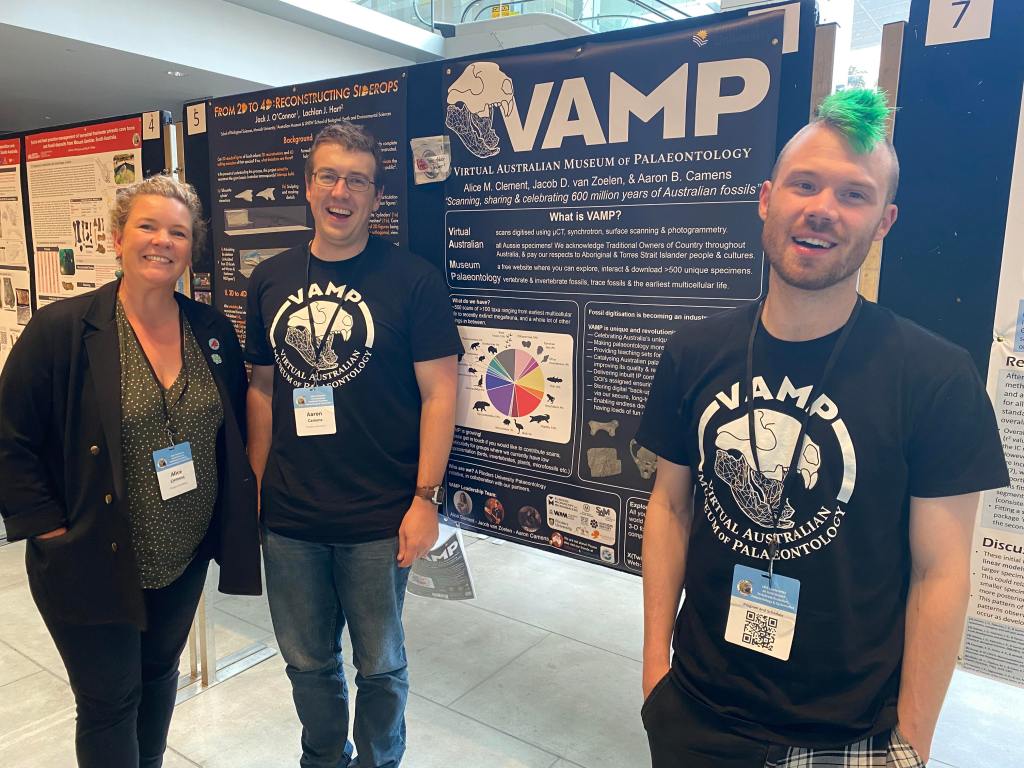
VAMP leadership team. Left to right, Jacob van Zoelen, Alice Clement & Aaron Camens.

But we couldn’t have done it without lots of help! VAMP is a Flinders University-led initiative, with support from Flinders Microscopy & Microanalysis, the South Australian Museum, the Western Australian Museum, and the Museum & Art Gallery of the Northern Territory, and MorphoSource. We also had many staff, mentors and volunteers giving generous support and guidance who have been invaluable.

Please read more about VAMP in our article published yesterday in The Conversation “A new virtual museum reveals 600 million years of Australian fossils in unprecedented 3D detail”, or listen to the Pals in Palaeo episode about VAMP here.

We are always on the lookout for new partners and more scans, so if you’d like to be involved then please get in touch.

** EXPLORE THE VAMP WEBSITE HERE **

Digital Palaeontology

I seem to have digital palaeontology on the mind lately…. I’m not talking about digits (fingers and toes), although sometimes that is exactly what I mean. I’m talking about the digitalisation of fossils into virtual computer models.

Modern scanning methods are revolutionising the way we do palaeontology these days, with increasing access to various methods such as diceCT, synchrotron, neutron or surface scanning. This enables the analyses we do and the questions we can ask are expanding beyond anything that has been possible before.

Thanks to the type of research that I do, I was lucky enough to be invited to present at a “Digital Palaeobiology” symposium held at the Department of Paleontology at the University of Zurich, Switzerland, last week.

My talk, Once we were fish: uncovering our distant piscine origins, explored the anatomical journey from placoderms to tetrapods as elucidated from modern scanning methods.

Other speakers discussed amazing methods used on digital palaeontological specimens including 3D geometric morphometrics, the use of AI in analysis, Computational Fluid Dynamics and Finite Element biomechanical analysis. It’s amazing what can be done with our virtual computer models!

I’m very grateful to the organisers, and had a fabulous time meeting the UZH students, staff, and my other “digital palaeo” colleagues. I loved visiting the beautiful city of Zurich and hope to get back there one day.