
Meet Harajicadectes, your 380 million year old great, great, great (etc) Grannie.
This fish, which was given the full name Harajicadectes zhumini, was described by myself and other colleagues, published this week in the Journal of Vertebrate Paleontology “A new stem-tetrapod fish from the Middle–Late Devonian of central Australia“.
This is a tetrapodomorph, or tetrapod-like fish, from ancient rock deposits in central Australia. This means this fish is more closely related to tetrapods (amphibians, reptiles & mammals), than it is to a salmon, for example. It bears important features suggesting it was capable of air-breathing, among other things.

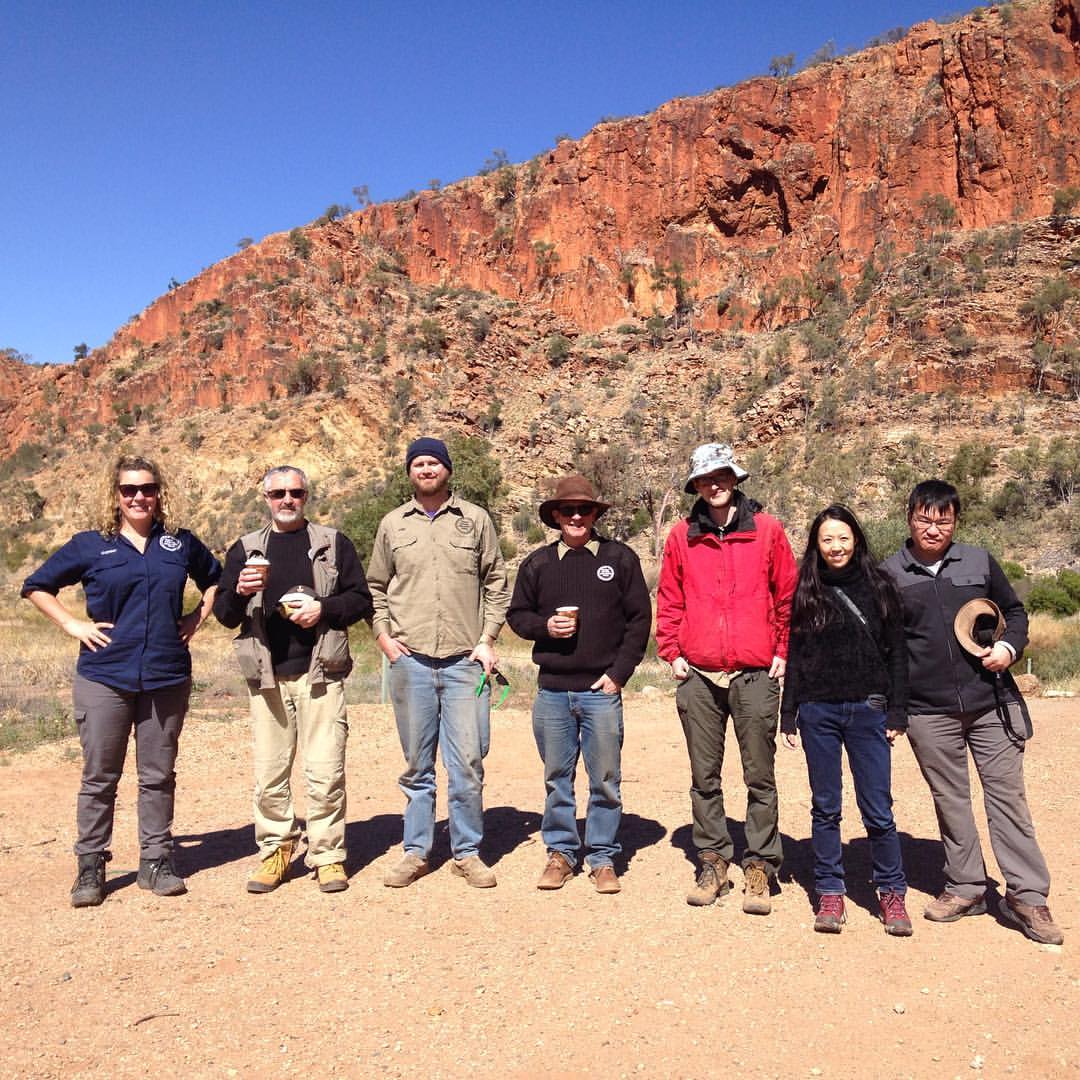
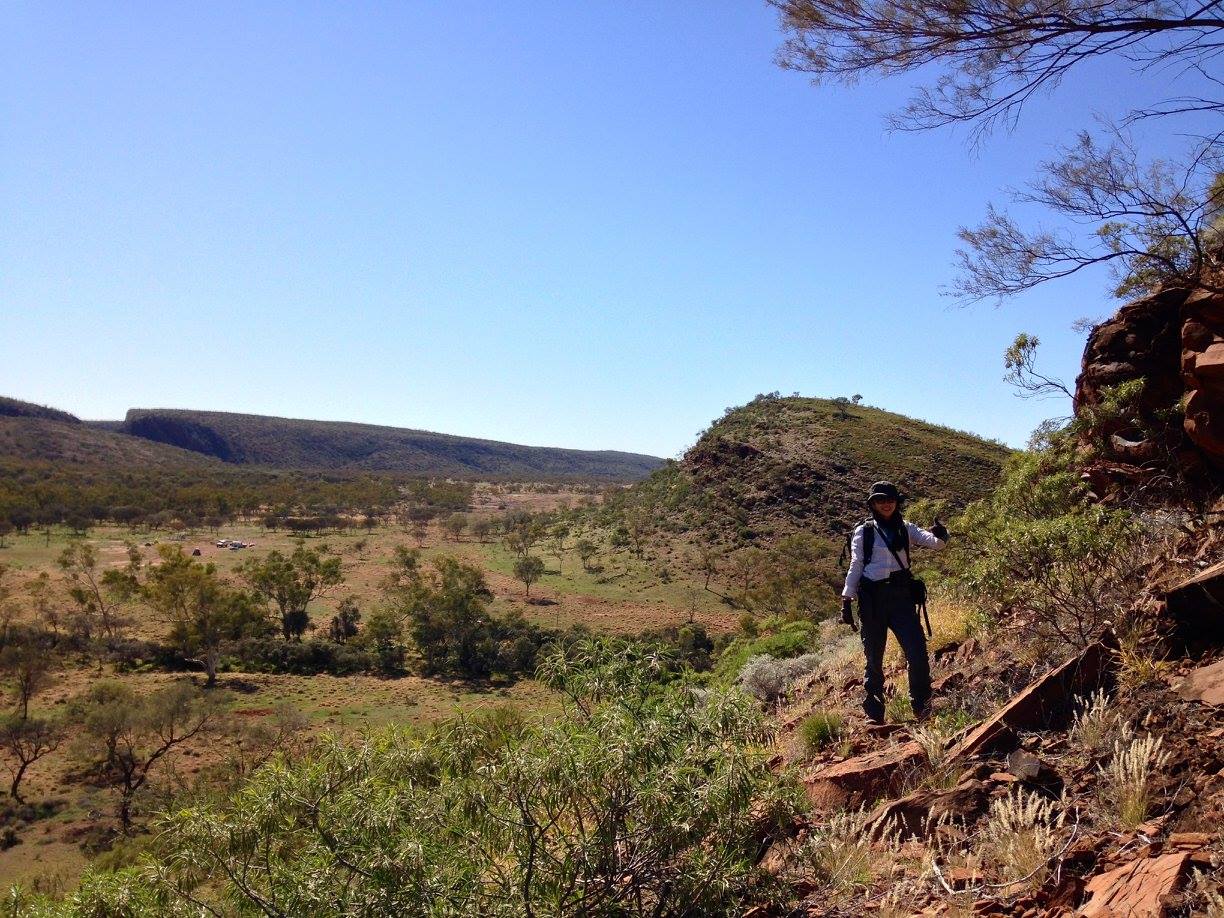
Bits and pieces of this fish have been found since the 70s by Gavin Young (ANU) and Alex Ritchie (Australian Museum), among others. However it wasn’t until a Flinders University field trip (with colleagues from ANU & MAGNT) to the area in 2016 uncovered the first complete specimen of Harajicadectes. Finally, all the little bits and pieces could confidently assigned to a single species.
Dr Brian Choo led this paper and is the artist behind the beautiful life reconstruction of this extinct predatory fish from an ancient central Australian river. No doubt there are many more treasures lying in wait to be discovered in the rocks of outback Australia!

If you would like to red more about this beastie, find our article published in The Conversation, “A 380-million-year old predatory fish from Central Australia is finally named after decades of digging.”

 Dr Alice Clement