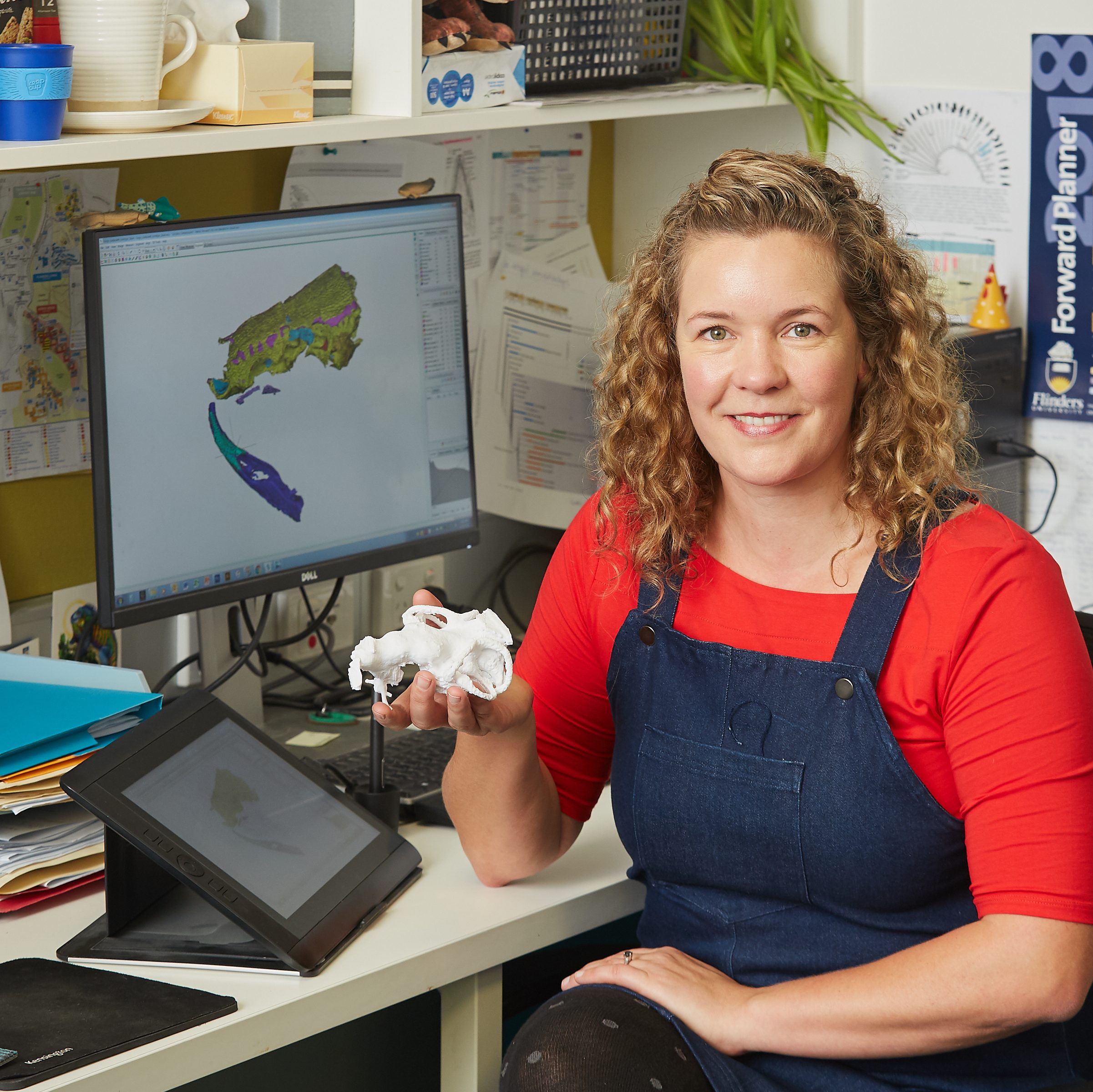
I’m very proud to present the most recently described fossil coelacanth fish, from the 385 million year old Devonian Gogo Formation on Gooniyandi Country in Australia, published last week in Nature Communications. In conjunction with elders from the Mimbi Community, we named graced it with the first name taken from Gooniyandi language, Ngamugawi wirngarri, meaning “ancient fish in honour of Wirngarri”.
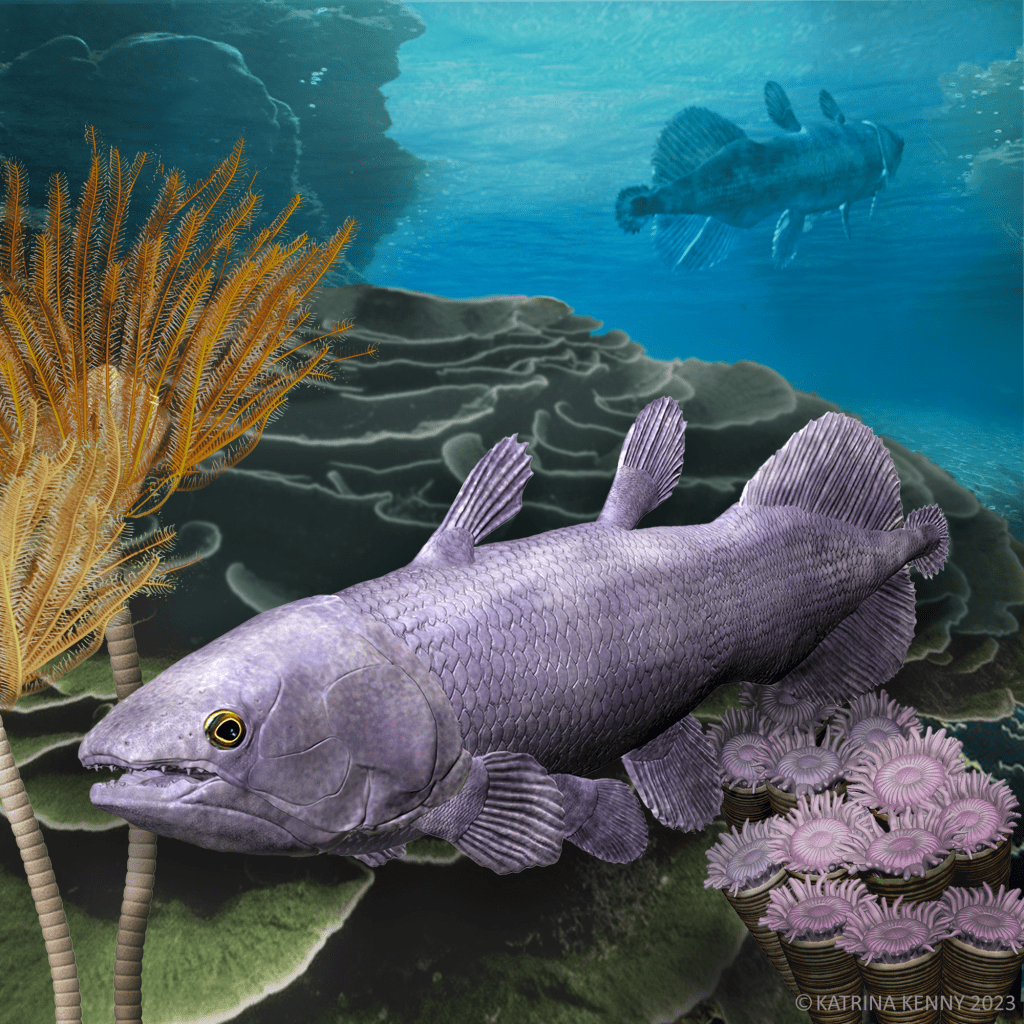
Our paper “A Late Devonian coelacanth reconfigures actinistian phylogeny, disparity, and evolutionary dynamics” not only describes a new fossil species, but explores and analyses the entire 410 million year evolutionary history of coelacanth fishes. It was a great honour to lead this project, and absolutely could not have been done without my talented and knowledgeable co-authors Richard Cloutier, Mike Lee, Ben King, Olivia Vanhaesebroucke, Corey Bradshaw, Hugo Dutel, Kate Trinajstic and John Long.
WATCH MORE HERE: https://www.youtube.com/watch?v=Z-7uDOiq4mA&t=3s
The whole project started back in 2008 when the late Dave Pickering from Melbourne Museum discovered the first specimen during a Gogo field trip led by Prof John Long. Immediately we knew we had something special, but exactly what it told us about evolution of this lineage took longer to tease out.

We first acid-prepared and then CT-scanned the specimen to reveal a beautifully near-complete and semi-articulated fish. Rare details of the braincase, visceral arches and more were revealed. Next we compiled and ran an extensive and comprehensive phylogenetic analysis, to determine where in the evolutionary family tree our fish belonged, but also how rates of evolution may have changed over the entire coelacanth lineage. We found some interesting differences depending on the type of characters we were analysing (discrete vs meristic vs continuous) using tip-dated, relaxed-clock methods, showing that living coelacanths are still evolving and may not deserve the title “living fossil” after all.
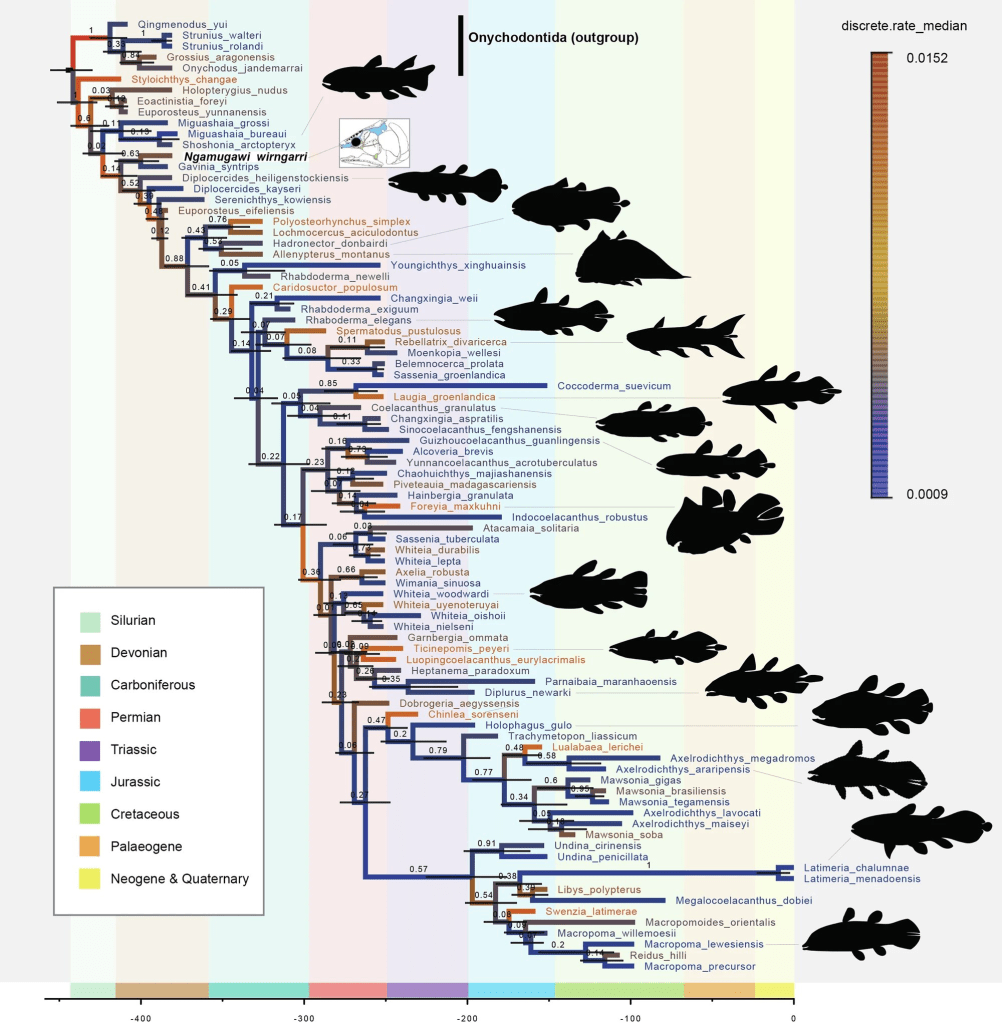
We also looked at disparity (shape change) of coelacanths through time, showing that some aspects remain conservative (body shape, lower jaw) while others vary more (e.g. cheek bones). Importantly, overall we see a considerable shift between Devonian vs all post-Devonian forms. And lastly, we analysed which putative external environmental factors (such as sea temperature, CO2 and O2 levels, % flooded area etc), finding that subduction flux had the greatest influence. Tectonic plate activity drives fish evolution!

If you would still like to read or learn more about our research, please read our article published in The Conversation “Exceptional new fish fossil sparks rethink of how Earth’s geology drives evolution” (and keep an eye out for a french language version coming soon).

 Dr Alice Clement
Very interesting; I’m also very impressed of your work! As I understand it,you have done an exellent job; congratulations!
Skickat från Outlook för iOShttps://aka.ms/o0ukef
LikeLike