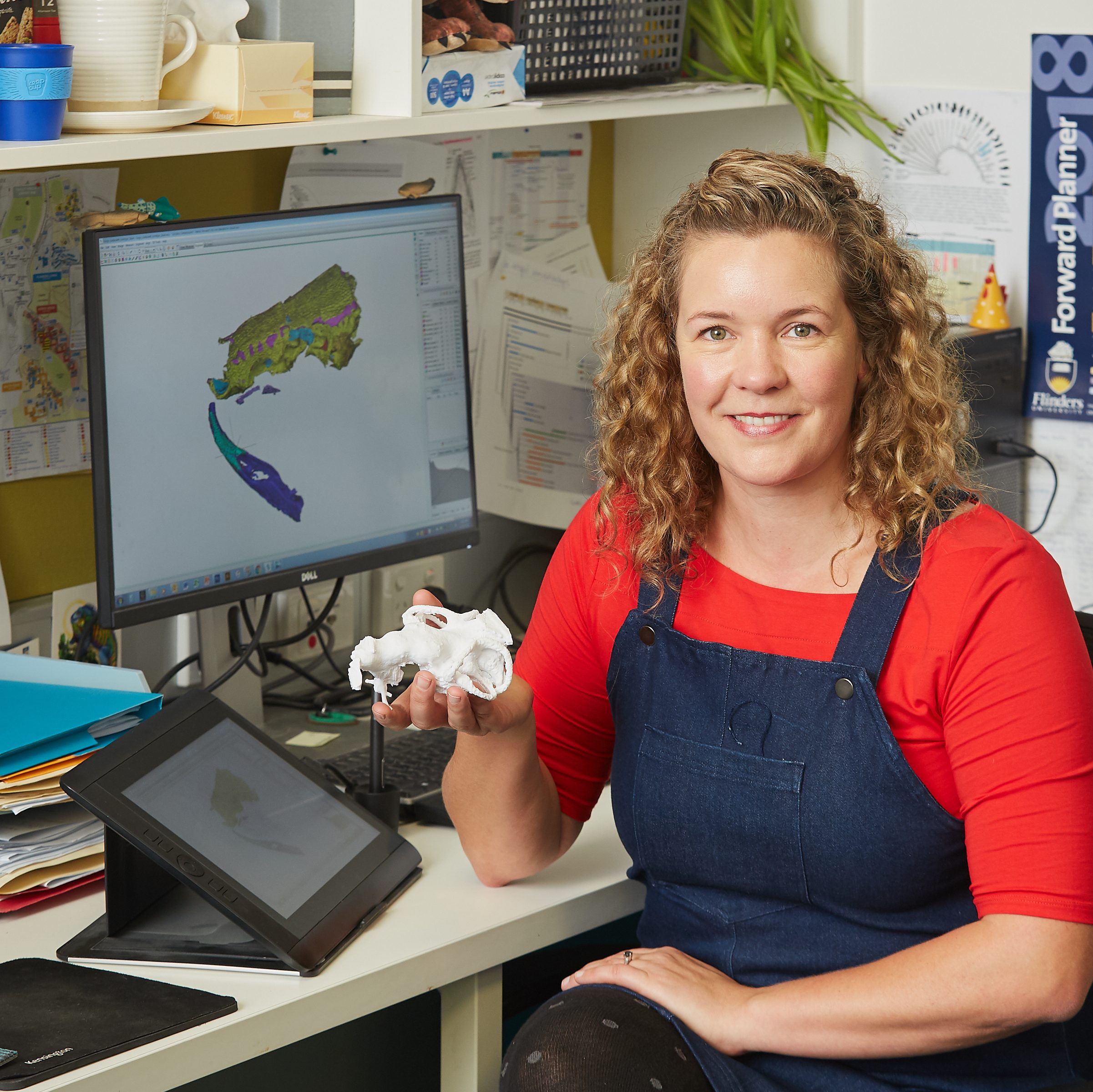
It was 2008. It is northern Australia in the winter time. It was hot, the scenery is spectacular and the wildlife a little more exotic than at home. I had recently completed my Honours research project describing a new lungfish fossil species from a site known as “Gogo” and I hoped to continue to do a PhD. I was part of a team of scientists who visited those same fossil localities producing some of the most spectacular extinct fish you’ve ever seen… this formative experience cemented my desire to learn everything I could about Devonian fishes.


Imagine then, the excitement for me to return to this magical place some 16 years later. That is exactly what happened earlier this month on the recent Flinders University-led field-trip up to the ancient Devonian reef in the Mueller Ranges in the Kimberley region of northern Western Australia. This is the land of the Gooniyandi people and it is spectacular.
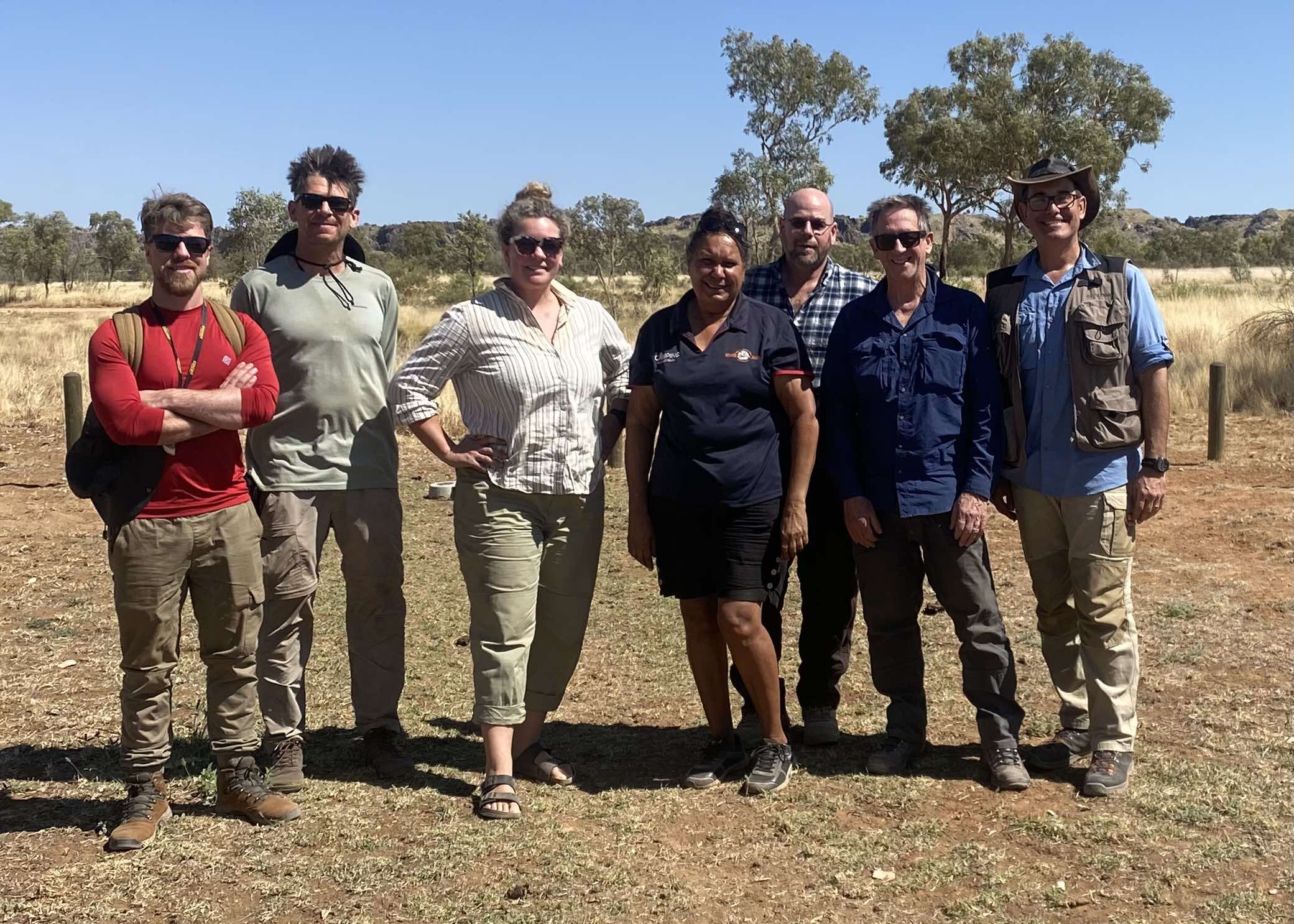
As part of a current ARC-funded grant, six researchers made their way to the fossil sites bearing the now world-famous “Gogo fishes”, or more accurately the budgerdee ngamugawi (Gooniyandi for “ancient fishes of Paddy’s Valley”). Our leader, John Long, has worked in the region for more than 35 years and published a huge volume of research on the fossil fish.
Along for the adventure we also had some invertebrate experts, Diego Garcia-Bellido (from the South Australian Museum) and Christian Klug (Palaeontology Museum and University of Zurich), to take a closer look at the creatures living on and around the fossil reef. Other valuable team members were Corey Bradshaw (global ecologist) and M. Ramon Fritzen (current PhD candidate), both also from Flinders University.

First task was to explore and examine the magnificent ancient reef structures in this area. Most people know about Australia’s Great Barrier reef stretching over 2000 km off the coast of Queensland (north eastern Australia), but did you know it wasn’t Australia’s first great barrier reef? During the Devonian Period, a huge reef built by organisms called stromatoporoids (not corals) grew in what is now present-day Western Australia.
If you visit Bandilngan (Windjana Gorge) on Bunuba country you will find the Lennard River (complete with abundant freshwater crocodiles) cutting through a section of the Napier Range for 4 km or so, exposing the ancient Frasnian and Famennian reefs. By walking the gorge trail you are literally walking back in time. (For the more adventurous among you, you can swim through a dark cave that traverses those same reef structures at Dimalurru (Tunnel Creek)).

Next we set up camp at the very comfortable Mimbi Caves campground about 100 km south east of Fitzroy Crossing. From here we could readily access the fantastic Mimbi Cave tour (I highly recommend it!), and the reef structures and fossils that we needed to study for our palaeoecological research.
This ancient reef teemed with life some 380 million years ago. Today, scientists have named and described more than 50 different species of fish from this site. The vast majority of these were now extinct fish known as placoderms. Of particular interest for me however, is that this site is the most diverse assemblage of lungfishes from anywhere or anytime in the entire world with 11 described species thus far. Not only are the fossils diverse, but often exceptionally preserved as well to reveal whole articulated animals, fish preserved in 3D and in some cases, even soft tissue preservation!

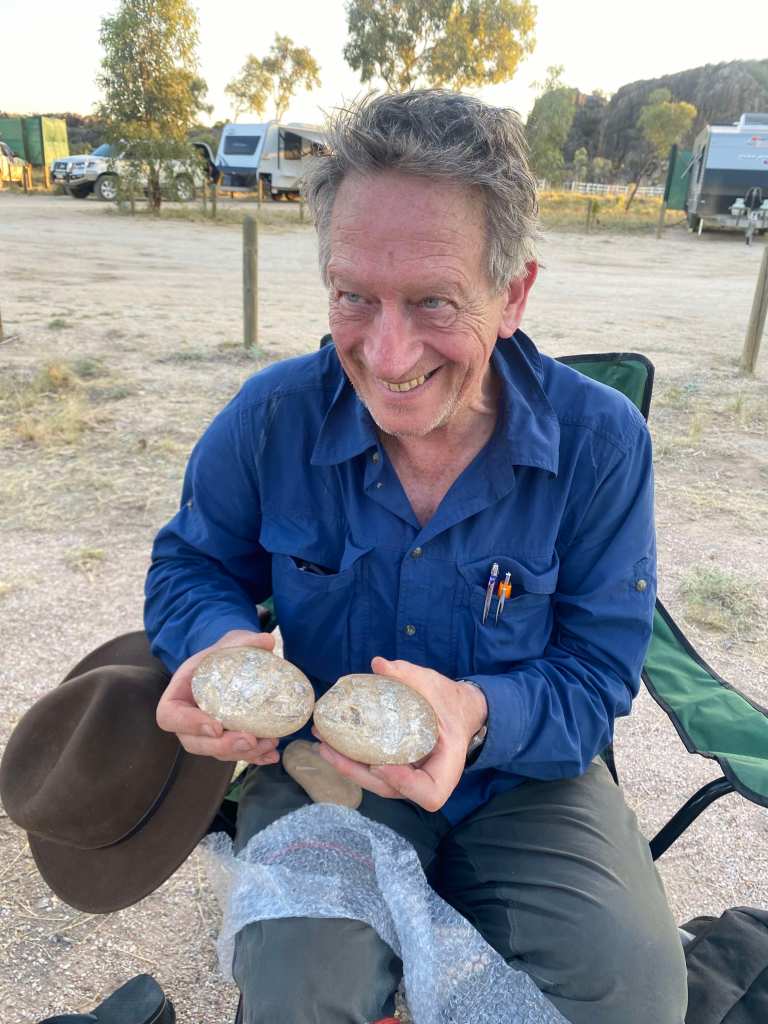
But the best part of the field-trip was the opportunity to sit down with some of the local elders who so graciously welcome us to their country and generously shared their stories with us. A special thanks go to Rosemary and Ronny, here’s hoping for a long, respectful, mutually beneficial and enjoyable relationship for years to come.


 Dr Alice Clement
2 thoughts on “Gogo (back) to Gogo”