Following on from the fabulous meeting that was the 17th ISELV in Rimouski and Miguasha, Quebec, I was also fortunate to attend the post-conference fieldtrip. Led by Dr Tetsuto Miyashita (from the Canadian Museum of Nature), 30+ participants were led through various Carboniferous age sites (299-359 million years ago) in eastern Canada.
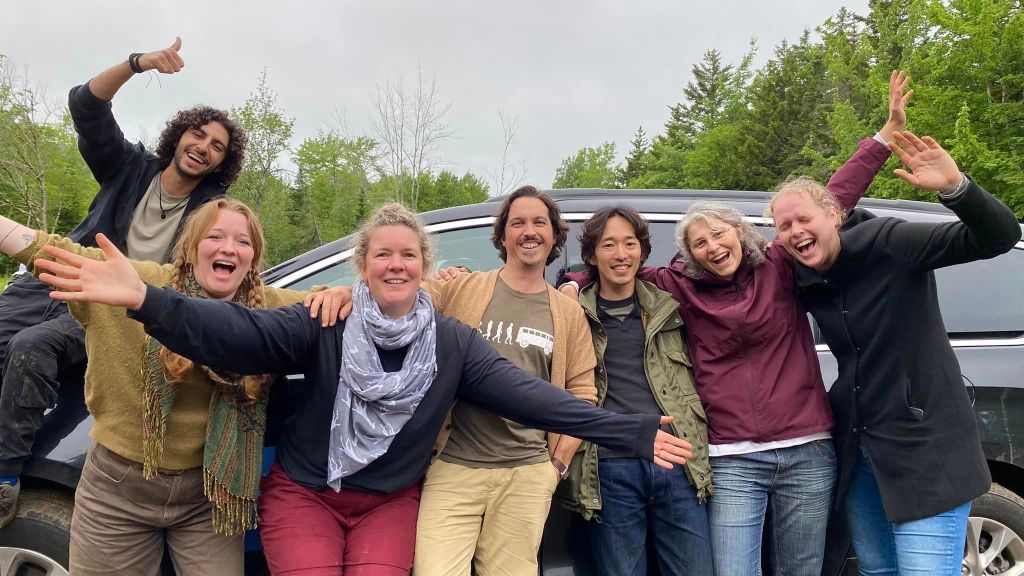
First, in New Brunswick we visited the Stonehammer UNESCO Global Geopark, located across the unceded territory of the Wolastoqiyik, Peskotomuhkatik and Mi’kmaq peoples. It encompasses ~2,500 km in Southern New Brunswick with a 1 billion year geologic history.

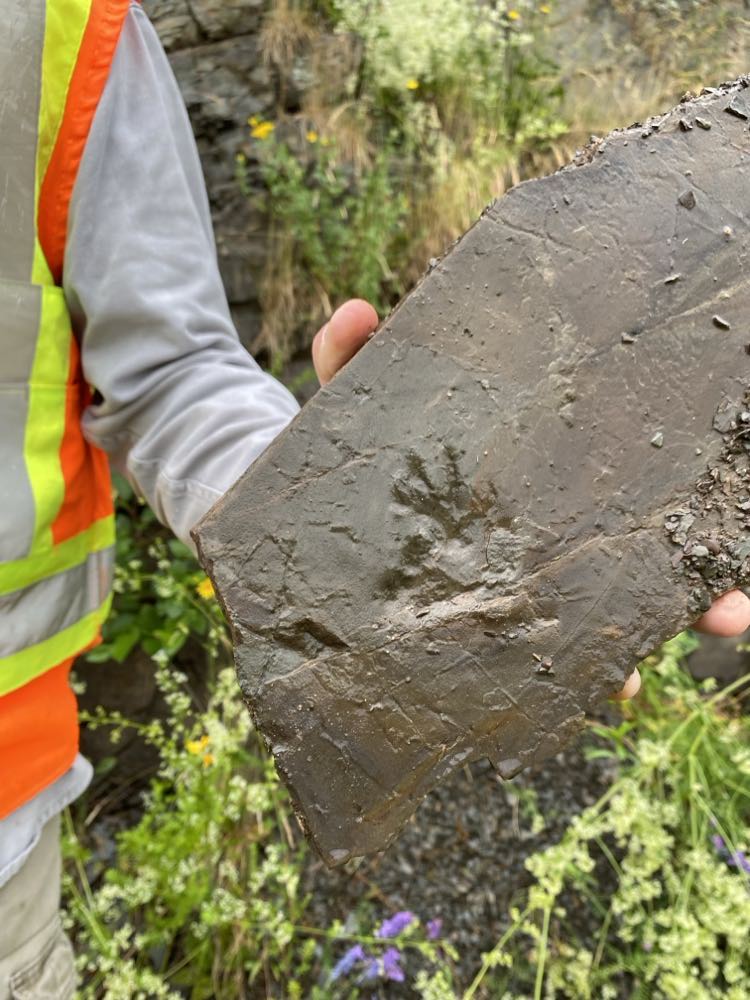
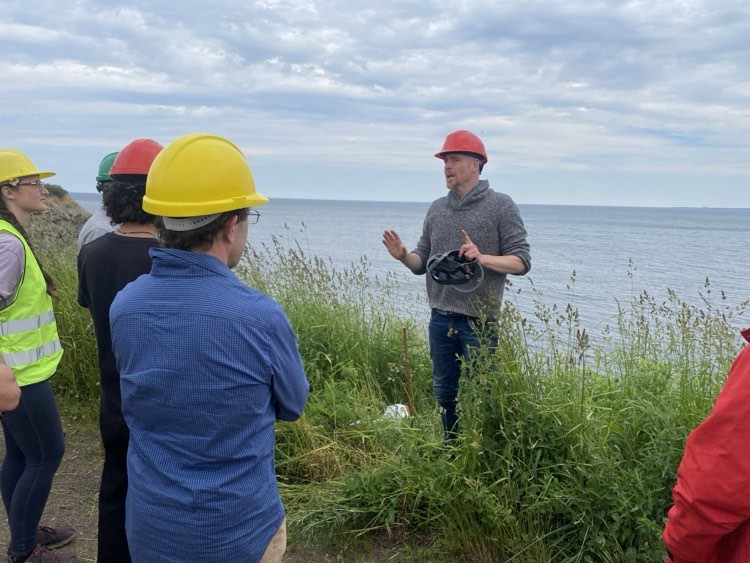
Matt Stimson (New Brunswick Museum) and team guided us across some Devonian-Carboniferous transition sections, many of which we accessed on the side of a highway! Some nice tetrapod footprints, and various other fishy bits were discovered.
On Day 2 we visited the Albert Mine, a Mississippian Lagerstätte (this is a German term used to describe a fossil site with exceptional preservation, either in quantity or quality). Pleased to say I found a pretty nice little actinopterygian (ray-finned fish) at this site! We also visited the dramatic Cape Enrage, (named so for the rough seas and turbulent waters) near the entrance to the Bay of Fundy National Park. Here we were deafened by the sound of the sea, but treated to impressive fossil log jams in the exposed cliff faces.
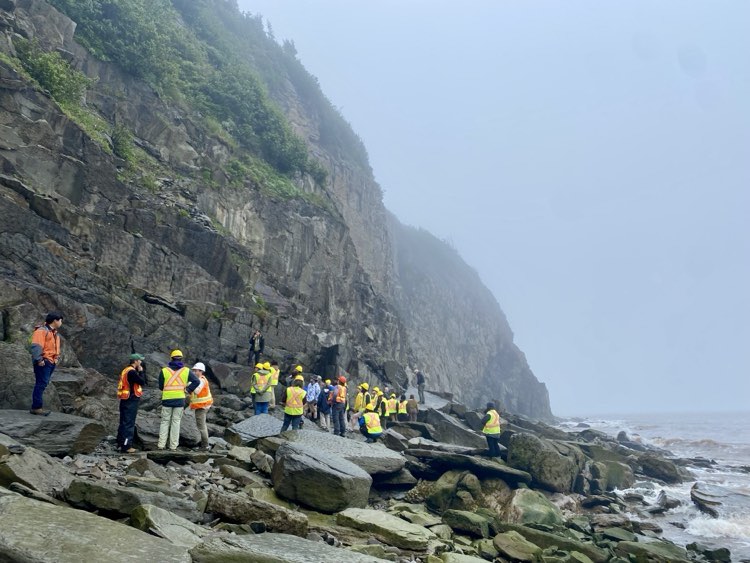


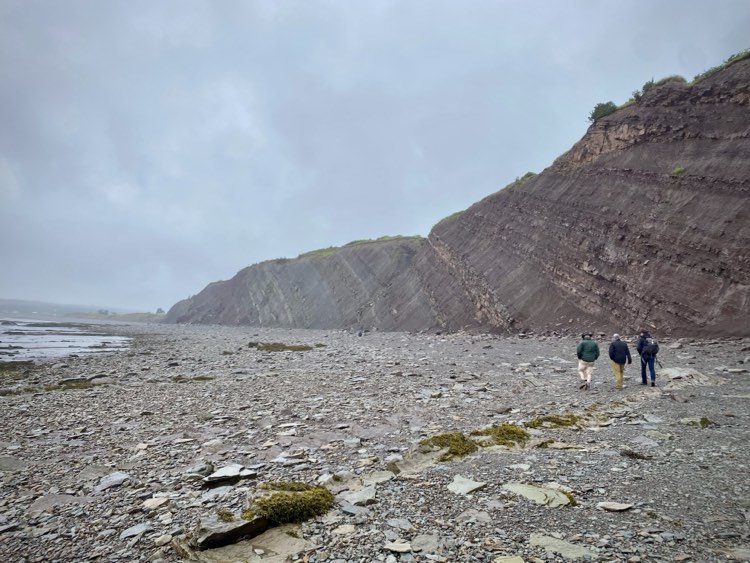
On Day 3, we left New Brunswick for Nova Scotia, braved an onslaught of rain and visited the UNESCO World Heritage site of Joggins Fossil Cliffs. This site is famous for the preservation of a small tetrapod called Dendrerpeton, (a type of temnospondyl amphibian) which was found fossilised within the stumps of lycopsid trunks. We could easily find plentiful fossils from many types of ancient plants from this now extinct Carboniferous forest scattered across the beach and in the cliffs.
Day 4 saw us continue across Nova Scotia to visit the beautiful sites of Cape Breton. We were graced with some blazing sunshine (yippee), stunning scenery, and the very friendly, knowledgeable and helpful Dr Jason Loxton. He welcomed us at the charming Cape Breton Fossil Centre, before guiding us to the Pennsylvanian tree stump localities in Point Aconi. Again there were textbook examples of stratigraphy, abundant fossils, and lovely scenery (some seals were curiously watching us from just off shore).


On our final day, we finished on a high with a visit to the Blue Beach Fossil Museum and were free to explore the beach in search of our own fossil finds. Blue Beach is also well known for its diverse fossil fauna, including both Late Devonian and Carboniferous faunas, as well as a rich tetrapod trackway (footprint) record.


We finished our fieldtrip with a lively group dinner in the charming city of Halifax, before saying our goodbyes and travelling on our separate ways. It was a wonderful week visiting these world famous sites and finding many fossils, and having a lot of fun with colleagues along the way. I’m looking forward to ISELV no. 18 in Morocco 2026 already!
*NOTE: if you are curious about my title for this blog entry, then let me explain. The various time divisions within the Carboniferous Period have their own names, some of which include the Tournasian, Mississippian, Pennsylvanian and so on…
 Dr Alice Clement