This week I was lucky enough to attend the International Congress of Vertebrate Morphology in Carins, northern Queensland, Australia. What exactly does that mean, you might ask? This is a meeting held every three years for researchers who love to study the size, shape, and form (morphology) of vertebrates, that is, animals with a backbone.
I was honoured to be invited to speak within a special symposium looking at New Approaches to Vertebrate Brain Evolution. I spoke about how I’m trying to understand how the brain changed in animals as they evolved over the water-land transition hundreds of millions of years ago.
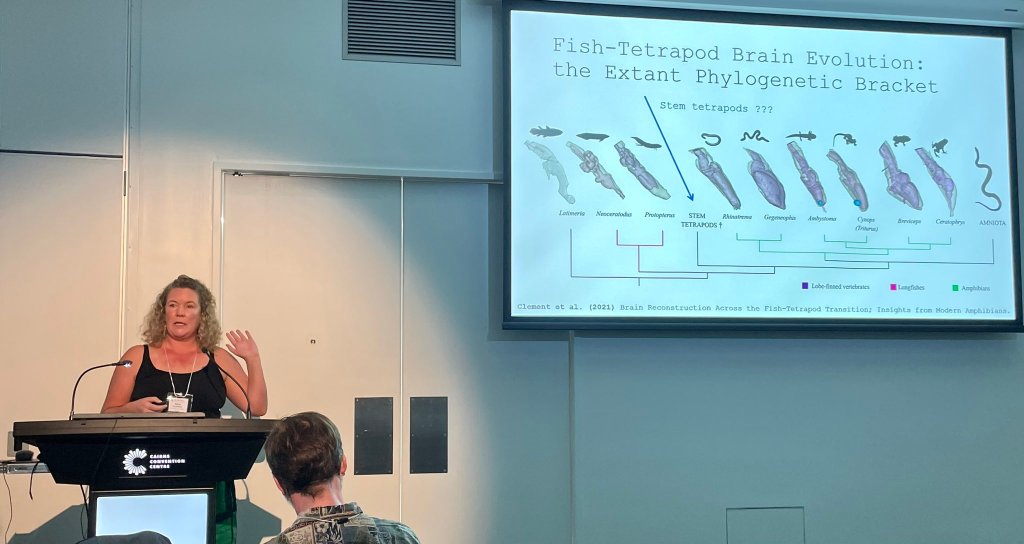

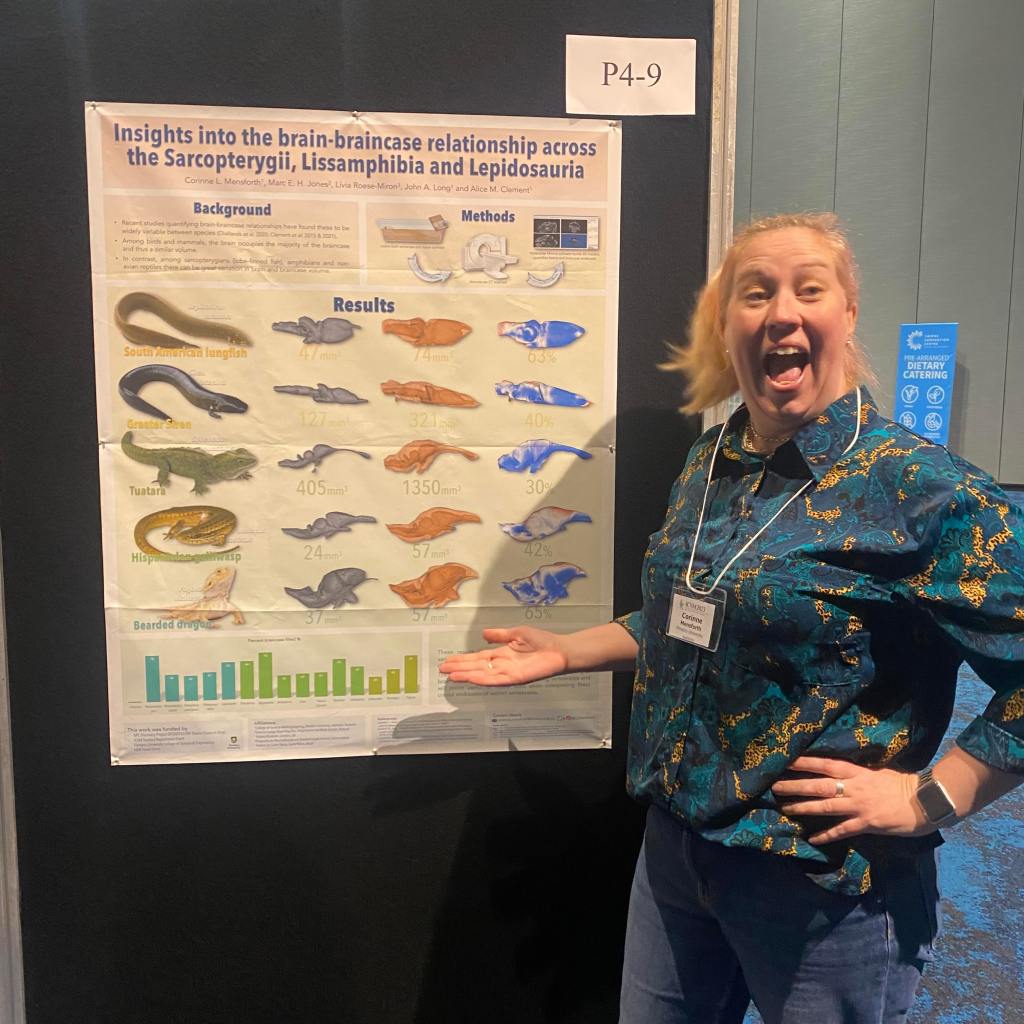
There were hundreds of amazing talks from fascinating presenters on everything from brains, bones, biomechanics and breathing (and much, much more). I was especially pleased to see two of the students from our lab attend the conference and show their work during the poster sessions.
Corinne Mensforth presented Insights into the brain-braincase relationship across the Sarcopterygii, Lissamphibia and Lepidosauria, while Josh Bland had a poster all about Using Finite Element Analysis to Interpret the Feeding Biomechanics of Devonian Lungfish Jaws. I’m very proud of the both of them.

Cairns in tropical QLD was a stunning setting for this meeting, with many attendees beside themselves with excitement seeing our amazing and unique Australian fauna. I was very glad to escape the cold winter of southern Australia for a week of warmth and amazing science, and catching up with colleagues from all over the world. I very much look forward to the next ICVM, due to be held in Canada in three years’ time.
 Dr Alice Clement